21–23 July 2025 · Rajasthan
Fort walls and the Pink City
Jaipur shifts constantly between street-scale detail and monumental geometry: a honeycombed façade, astronomical instruments, steep gateways, and halls that turn reflected light into decoration.
Inside the old city
Architecture at the pace of the street
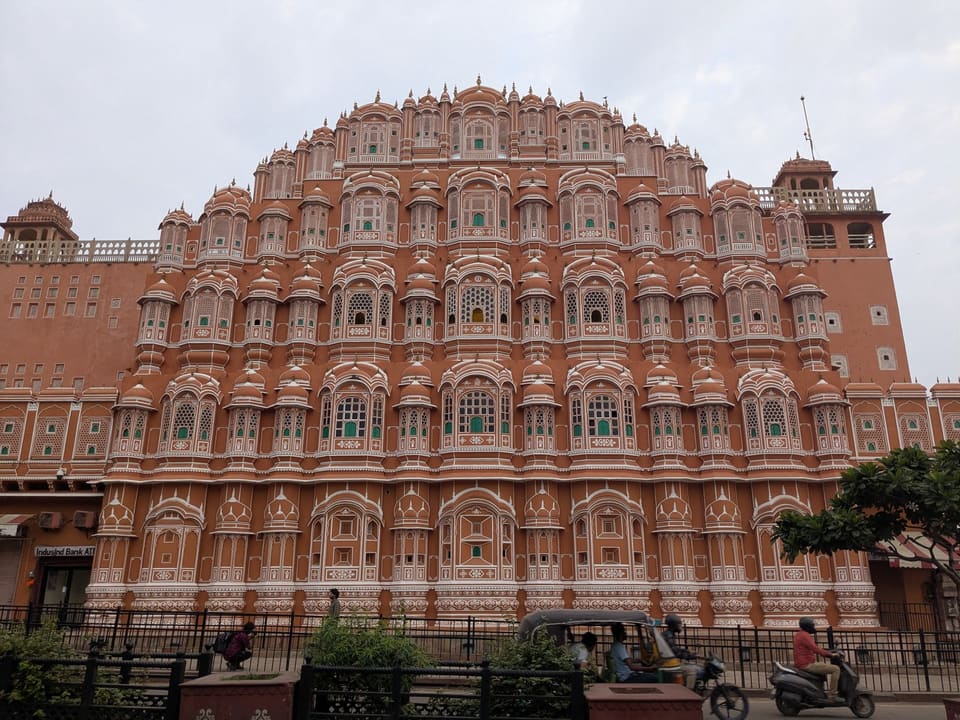
The best-known view of Hawa Mahal is also one of Jaipur’s most urban experiences. Its patterned elevation does not sit apart in a ceremonial garden; it meets a busy street. Traffic, shopfronts, people, and the façade all share the frame.
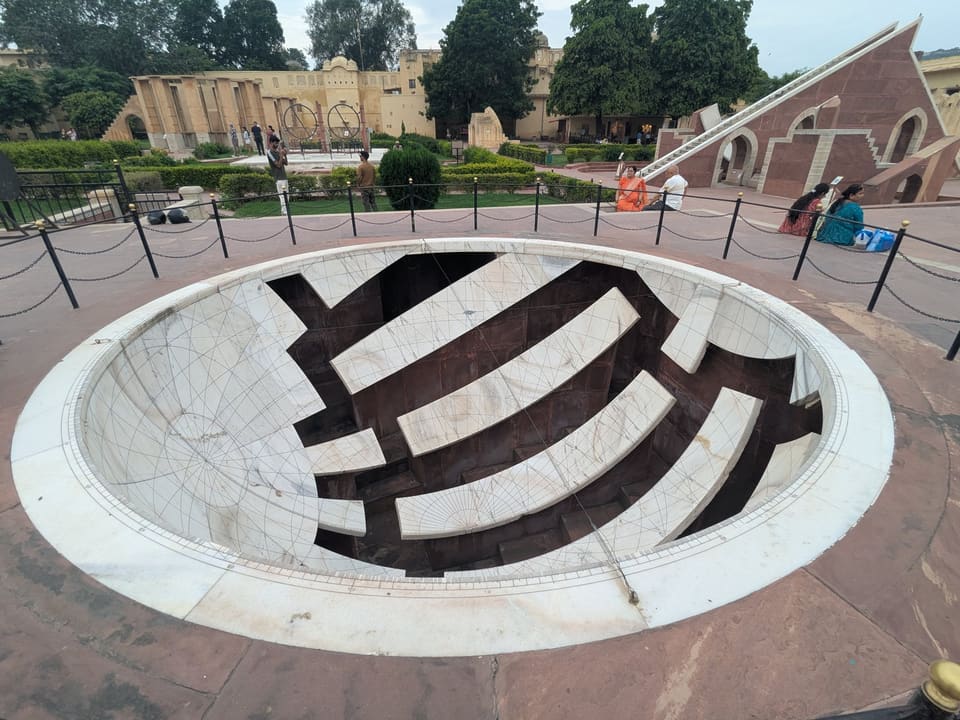
Nearby, Jantar Mantar changes the visual language from screened windows to immense geometric instruments. It is a place to walk around shapes rather than simply look at them. Together, the two sites make a compact old-city pairing, with enough time left to notice painted doors, shaded arcades, and the everyday rhythm between landmarks.
Beyond the city walls
Climb through Amer in stages
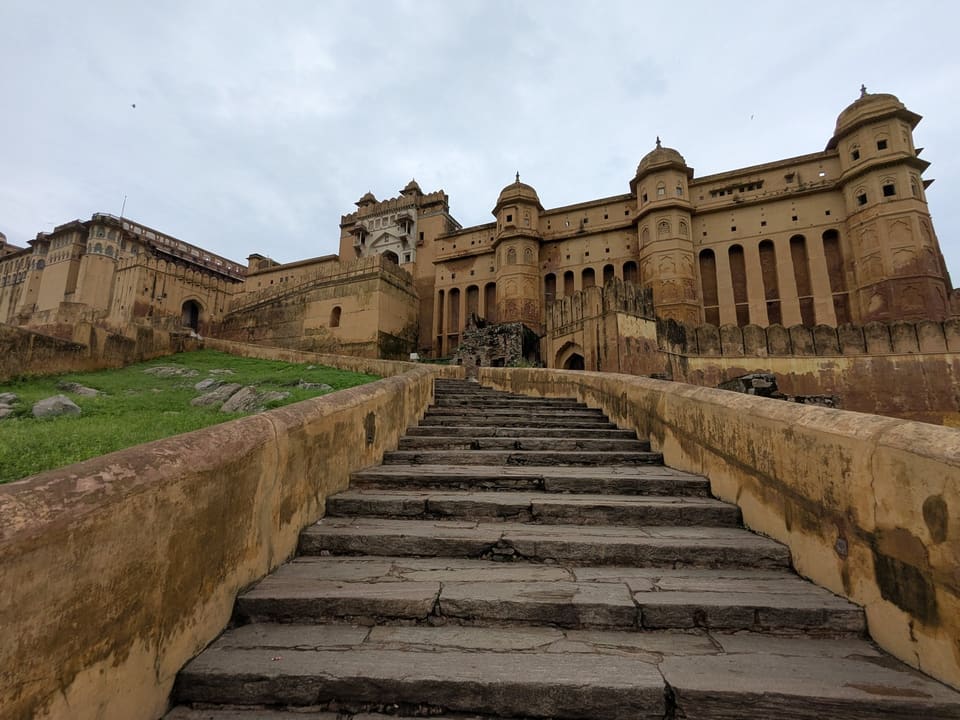
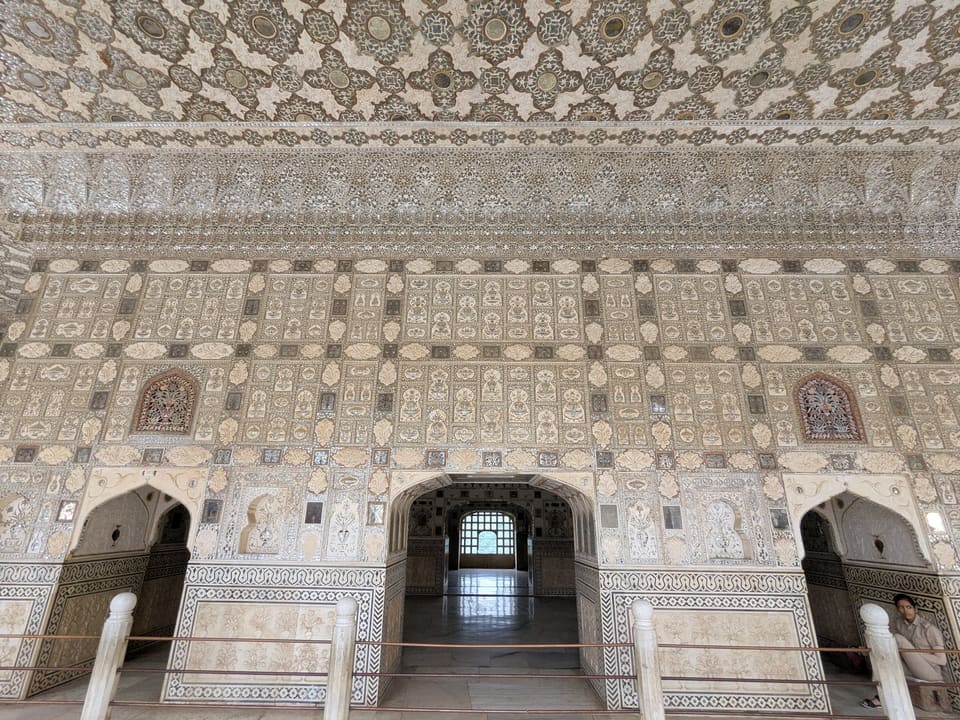
Amer Palace is a change of altitude and tempo. Broad approaches narrow into gates; public courts give way to more intricate rooms. The camera recorded that progression in stone steps, massive walls, painted surfaces, and mirror work that rewards close attention.
Old city morning
Pair Hawa Mahal with Jantar Mantar while the day is still relatively cool.
Amer approach
Allow time for the climb and for the fort’s relationship with the surrounding hills.
Courtyards
Pause as each gateway reveals a new scale, surface, and degree of enclosure.
Interior detail
Save attention for the final rooms; the smallest reflective details are easy to rush past.
Photo essay
Geometry from city to fort
Before you go
Plan around heat, distance, and detail
Divide the day
Keep the compact old-city sites together and give Amer a separate, unhurried block.
Carry water
Approaches and courtyards can be exposed. Dress for sun and check seasonal conditions.
Use your feet
Short distances on a map may hold dense traffic and much visual detail. Walking slowly pays off.
Check photography rules
Permissions can vary by room, monument, and equipment. Follow current signs and staff guidance.
Context
Official reading
Practical and historical context was checked against Rajasthan Tourism’s pages for Hawa Mahal and Amer Palace.