Municipality · Vietnam
Hanoi
A route through the capital’s citadel, lakeside temples, cathedral quarter, and the modest stilt house of Hồ Chí Minh.
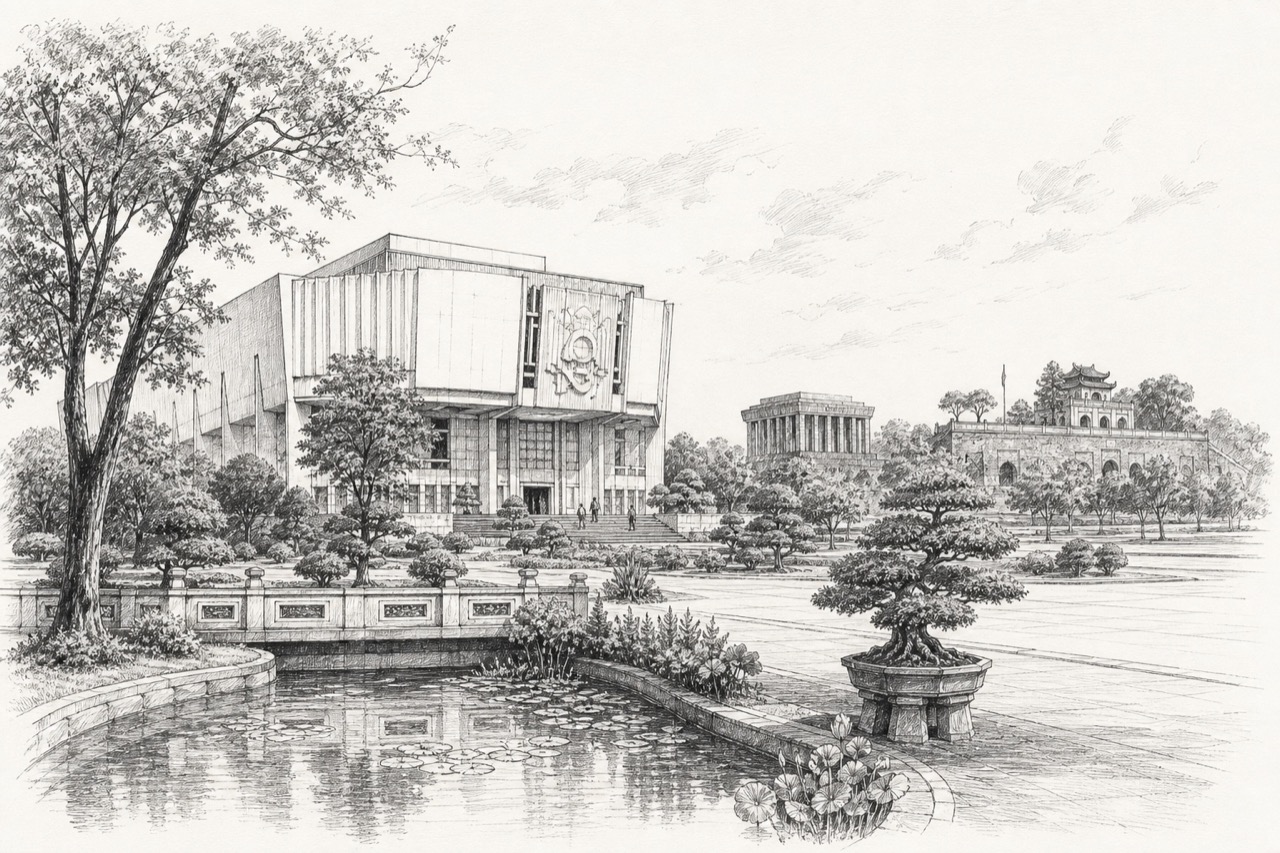
One canonical city journal
Everything for Hanoi, together
A route through the capital’s citadel, lakeside temples, cathedral quarter, and the modest stilt house of Hồ Chí Minh.
This page consolidates the city’s writing, photographs, mapped stops, practical detail, and locally matched saved places. Regional route pages remain useful for wider context, but this is the stable journal URL for Hanoi.
Consolidated journal
Descriptions, photographs, and details
The entry below preserves the useful material that previously lived on an independent journal page.
2 October · Early Hanoi
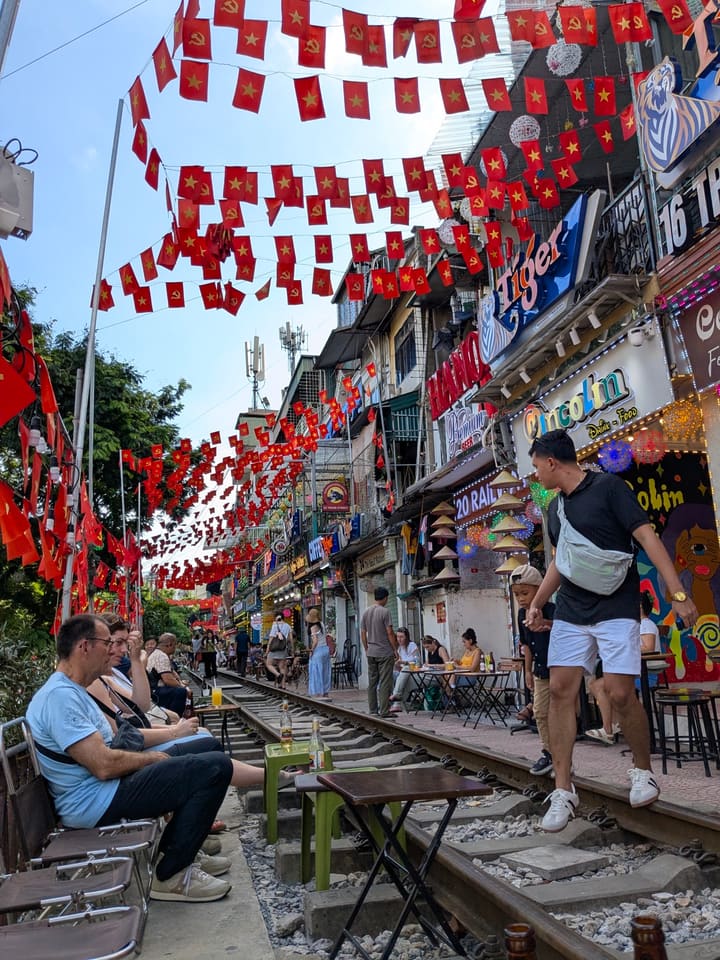
Begin where the railway narrows the street
The Hanoi sequence opens along the railway corridor, where café tables, balconies, and bright decorations crowd close to the tracks. It is a striking urban frame, but it is also an active railway. Access rules and train movements take priority over photographs; use authorised entrances, follow local directions, and never stand on the line for a shot.
2 October · Thăng Long
Begin with the city beneath the city
The Imperial Citadel of Thăng Long is the route’s historical anchor. Standing gates and walls are only the visible part: the site also preserves archaeological layers associated with successive periods of the capital. Moving slowly here makes the rest of Hanoi feel less like separate monuments and more like a city repeatedly rebuilt around power, belief, and daily life.
A quieter scale
Read the stilt house through its restraint
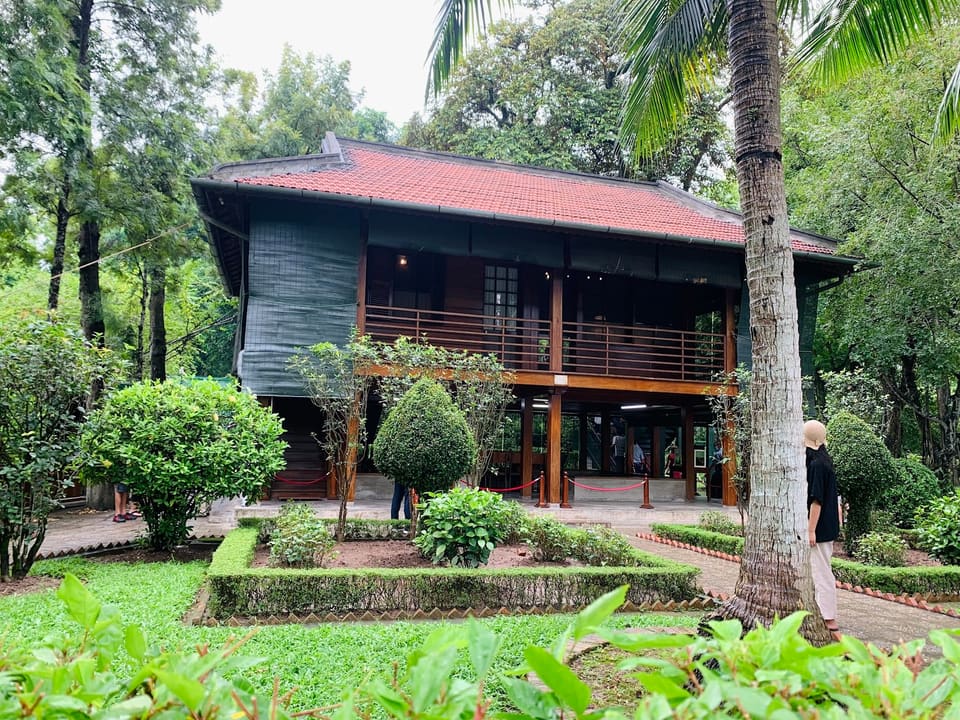
Behind the ceremonial landscape of Ba Đình, Hồ Chí Minh’s Stilt House shifts the scale. The author’s field note remembers the simple timber structure, surrounding trees and pond, and the glimpse of a small bedroom and study with books and an old radio. That modesty is the point; allow the site’s rules and security to set the pace.
Hoàn Kiếm to West Lake
Let water connect the sacred places
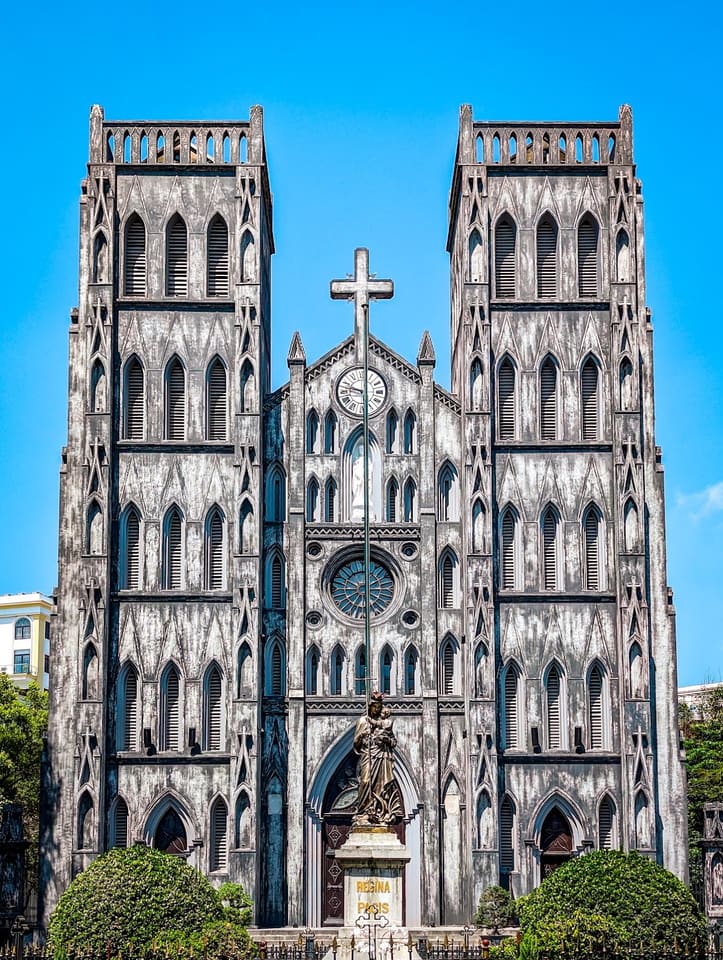
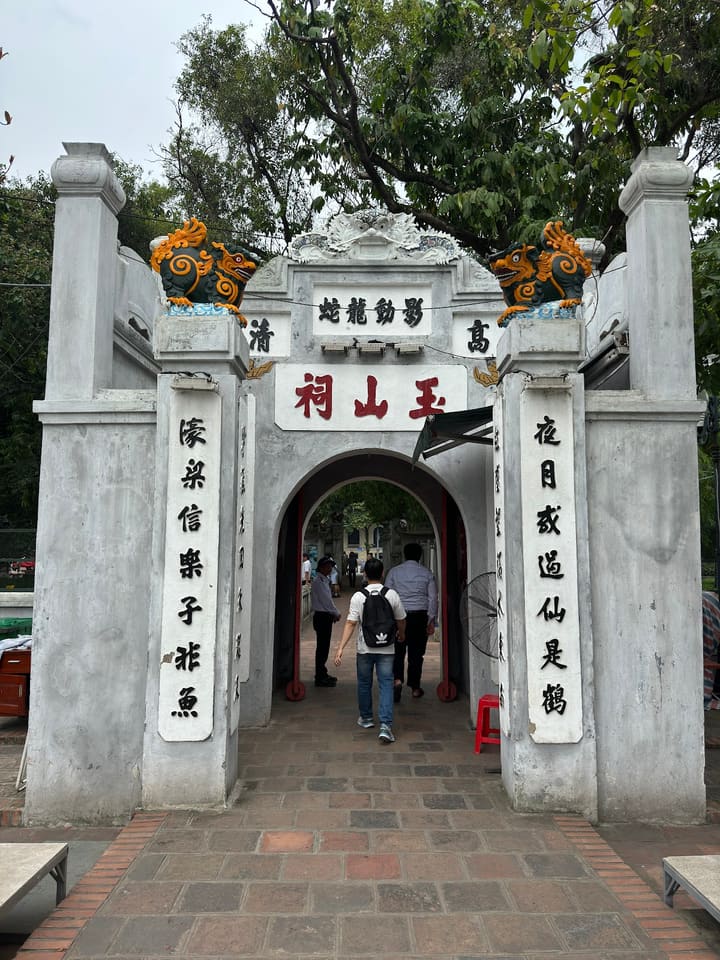
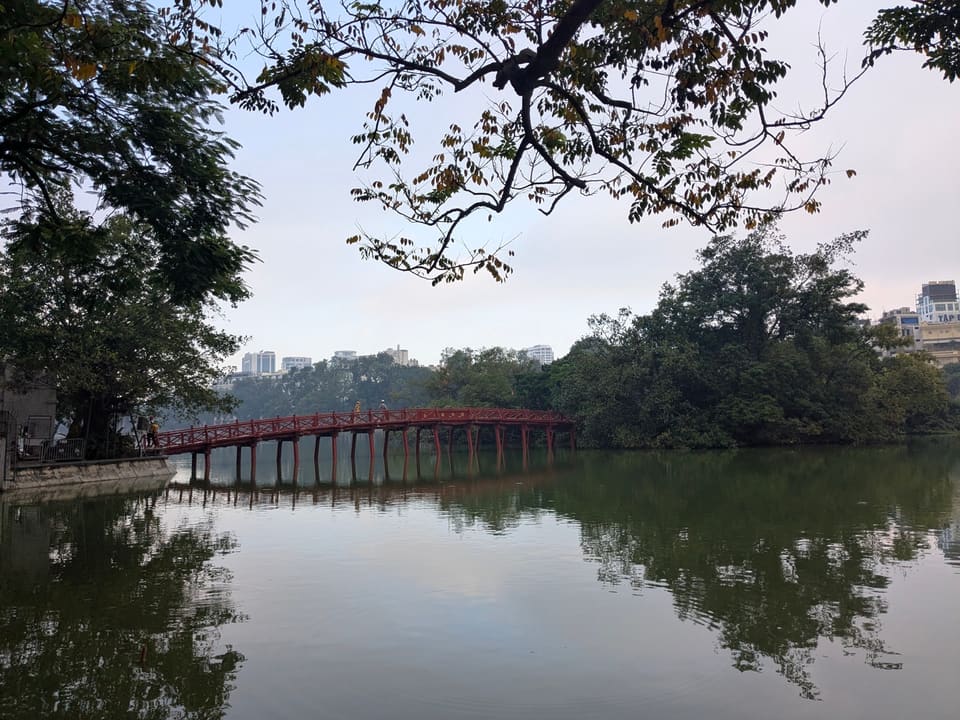
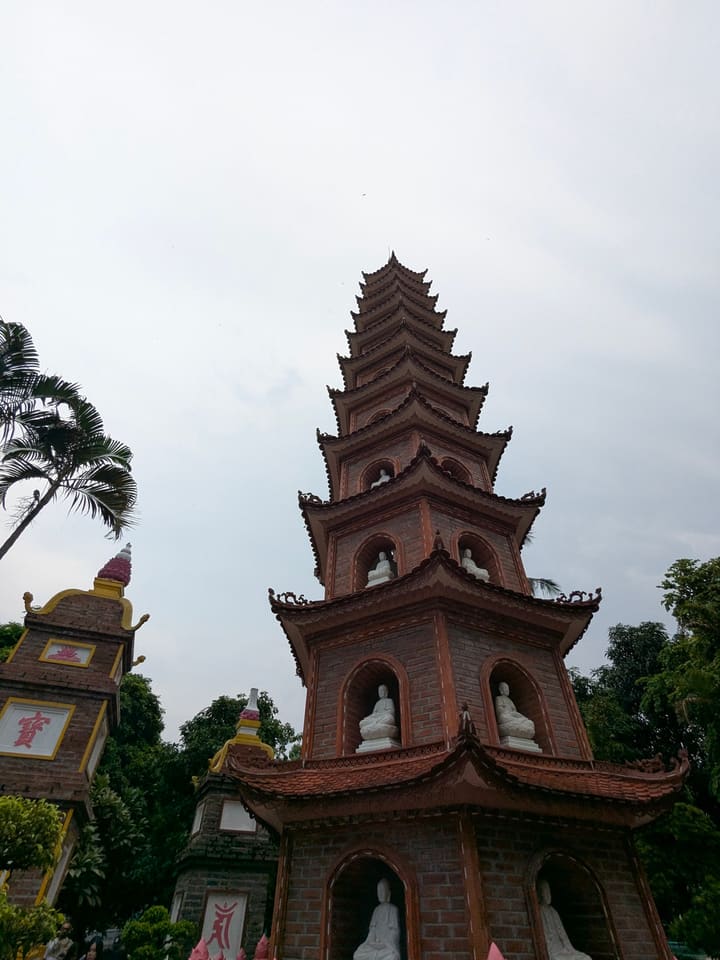
Around Hoàn Kiếm, the red bridge to Ngọc Sơn Temple turns a busy city walk into a short crossing over water. St Joseph’s Cathedral brings a very different architectural presence only a few streets away. Farther north, Trấn Quốc Pagoda sits beside West Lake, where the longer horizon creates a calmer end to the route.
Citadel
Start early enough to give the archaeological and standing remains proper time.
Ba Đình
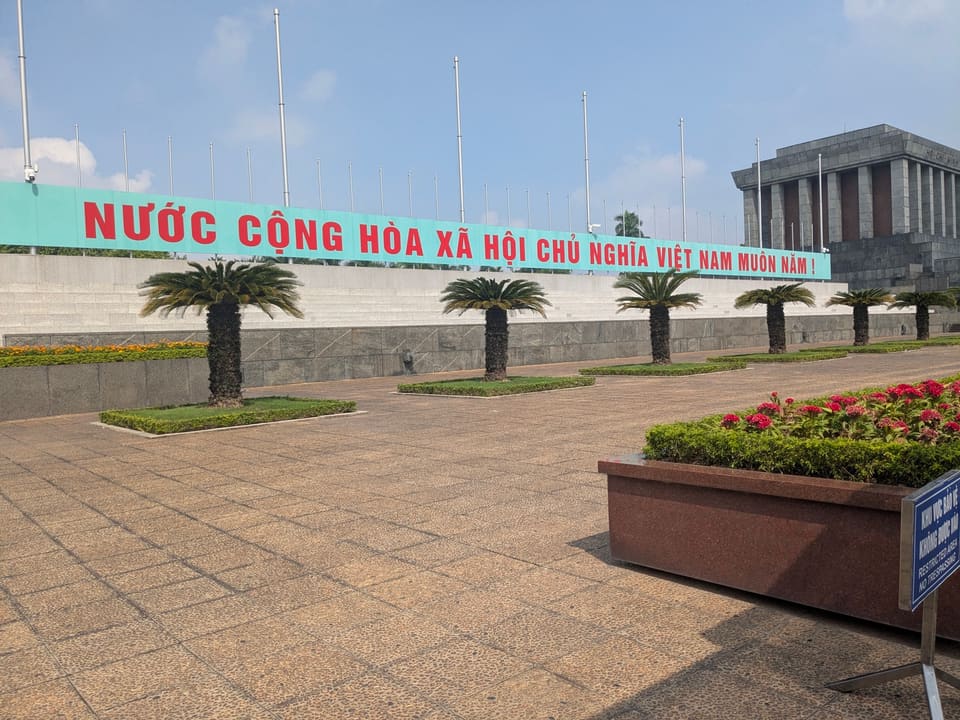
Dress respectfully and expect formal security procedures around the complex.
Hoàn Kiếm
Pair Ngọc Sơn Temple with the surrounding streets and cathedral quarter.
West Lake
Finish at Trấn Quốc when the light softens and the lakeside pace slows.
4 October · Văn Miếu
Slow down inside the courtyards
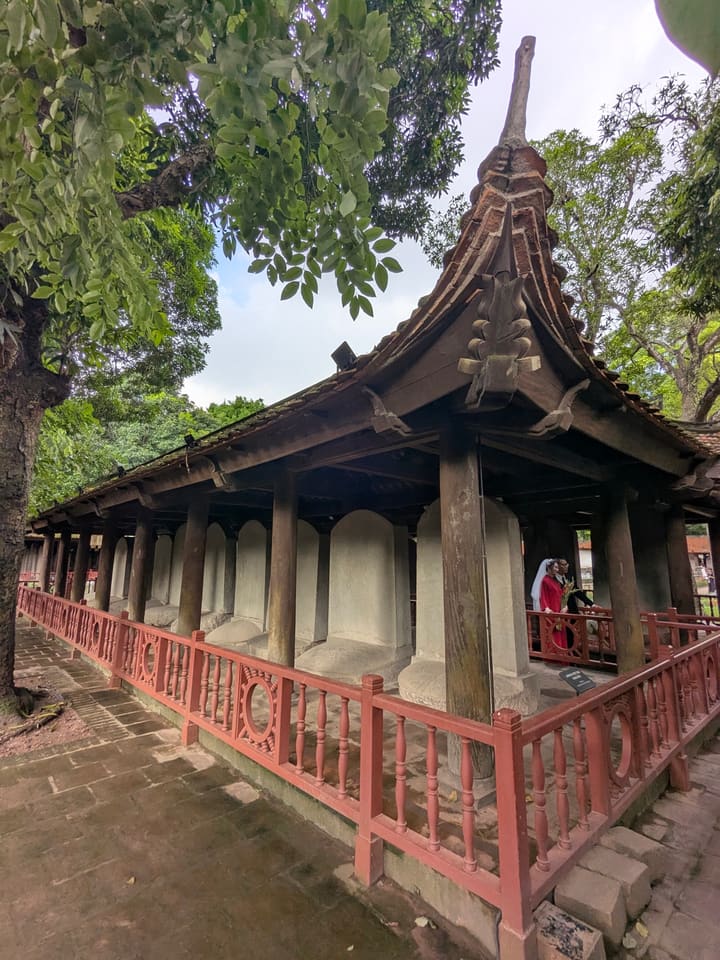
The Temple of Literature changes pace again. Brick paths, mature trees, timber galleries, and successive courtyards create a measured route away from Hanoi’s traffic. The visit is most rewarding when the gates and axial spaces are read as a sequence rather than treated as isolated photographs.
Photo essay
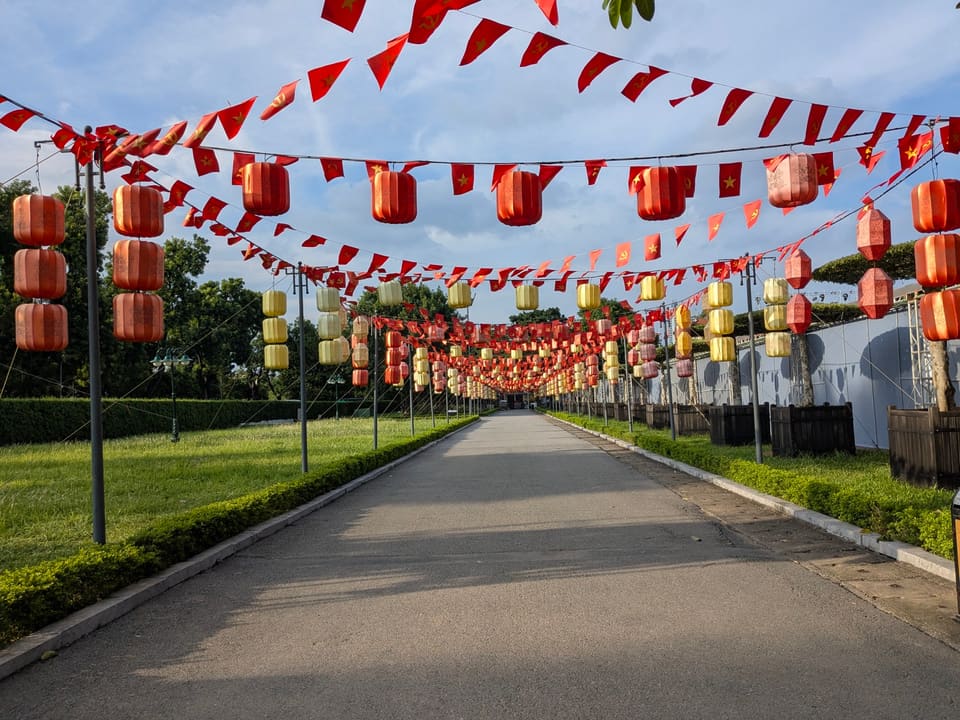
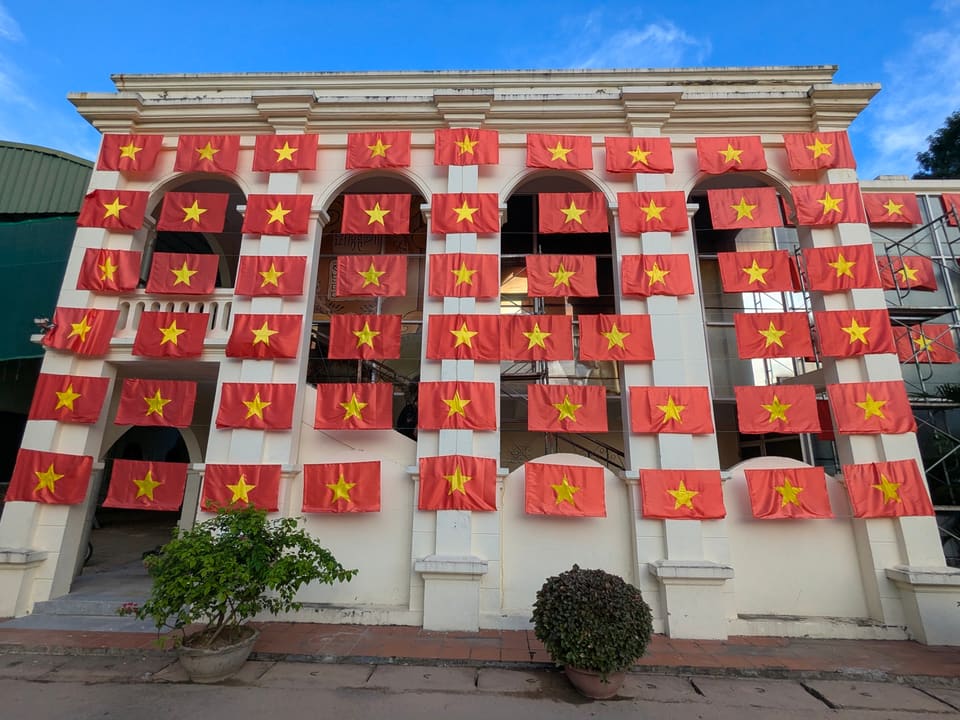
Ten ways Hanoi changes character
Before you go
Plan clusters, not a checklist
Respect active sites
Dress neatly, keep voices low, and follow photography notices at temples and memorial areas.
Protect walking time
Hoàn Kiếm is best discovered between landmarks, not only at them.
Expect closures
Official ceremonies and conservation work can alter access with little notice.
Use the lakes
They provide natural pauses between dense historical and architectural stops.
Field impressions were adapted from the author’s public Google Maps reviews .
Context
Official reading
Historical context was checked against the Thăng Long–Hanoi Heritage Conservation Centre and Vietnam Tourism’s Hanoi visitor guide . Verify current visitor regulations and access before travelling.
Broader route context remains in the source travel guide.
Personal shortlist
Want to Go places around Hanoi
These pins come from the personal Google Maps Want to Go collection and fall inside this city’s mapped boundary or local radius. Every matching pin is available on the searchable map above.
The interactive map contains 4 more saved places.
Journal notes
Use this as a living travel record
Verify current access
Opening hours, permits, transport, weather, and local rules can change after a journal entry is written.
Read the map selectively
The saved list is a set of possibilities, not a checklist. Filter it and build a route around one compact area at a time.
Distinguish visits from ideas
Green journal stops are documented or photographed; red Want to Go pins remain future possibilities.
Add the next chapter here
Future descriptions and photographs now have one stable city page instead of being split among collection pages.