Special administrative region · China
Macao
A compact 2018 walk through squares and façades shaped by centuries of Chinese and Portuguese exchange.
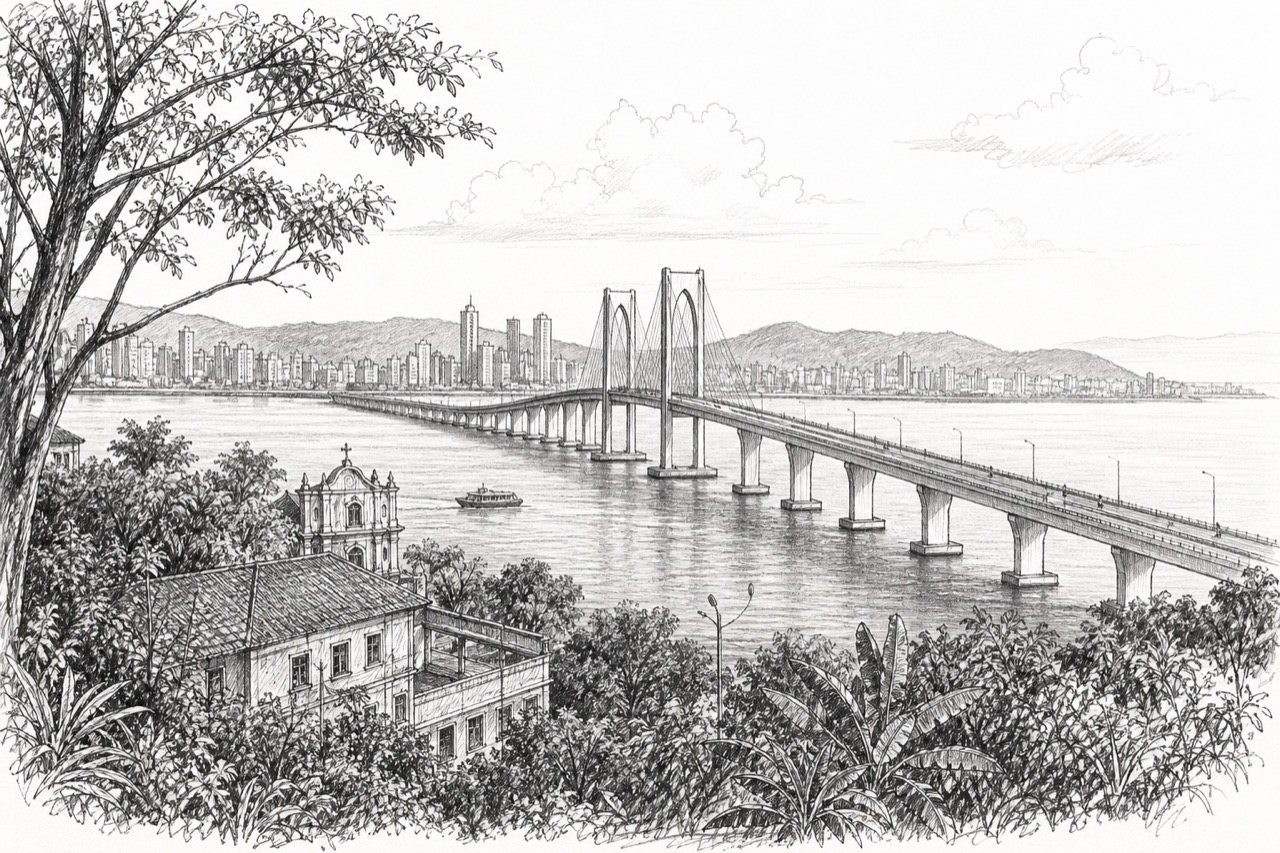
One canonical city journal
Everything for Macao, together
A compact 2018 walk through squares and façades shaped by centuries of Chinese and Portuguese exchange.
This page consolidates the city’s writing, photographs, mapped stops, practical detail, and locally matched saved places. Regional route pages remain useful for wider context, but this is the stable journal URL for Macao.
Consolidated journal
Descriptions, photographs, and details
The entry below preserves the useful material that previously lived on an independent journal page.
A walking city
Begin with the spaces between landmarks
Senado Square introduces Macao through surfaces: wave-pattern paving underfoot, arcaded façades at the edges, signs and balconies above. It is tempting to frame the square and move directly to the next famous site, but the streets between are the essential part of the route.
The journal records a centre shaped by overlap rather than separation. Portuguese civic architecture, Chinese businesses, churches, temples, apartment blocks, and contemporary towers occupy a walkable area. The result is best understood at street speed, where small changes of material and use remain visible.
The surviving façade
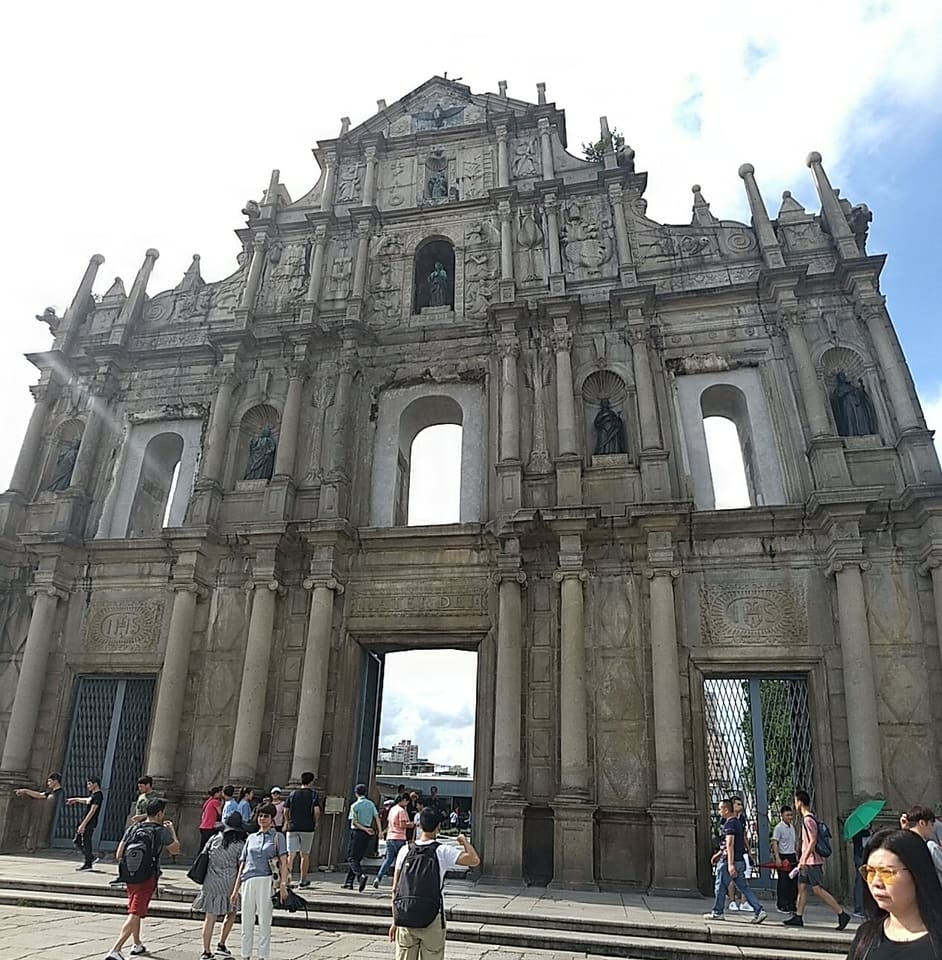
Approach the Ruins of St Paul’s gradually
The stone façade is dramatic, but the approach gives it power. It appears above a rising street and then fills the view from the broad steps. Move closer and the front becomes layered sculpture rather than flat silhouette; move around it and the absence of the former church becomes just as important as what remains.
Senado Square
Start early enough to see the paving and façades before the main pedestrian flow builds.
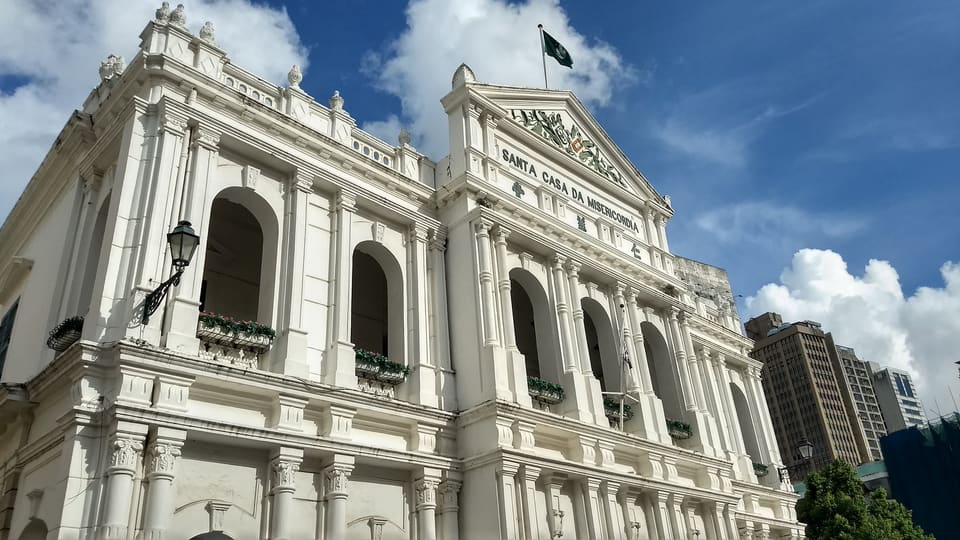
Civic interiors
Where public access is permitted, compare formal interiors with the busy square outside.
Street ascent
Follow the lanes towards St Paul’s and keep looking back at the changing urban view.
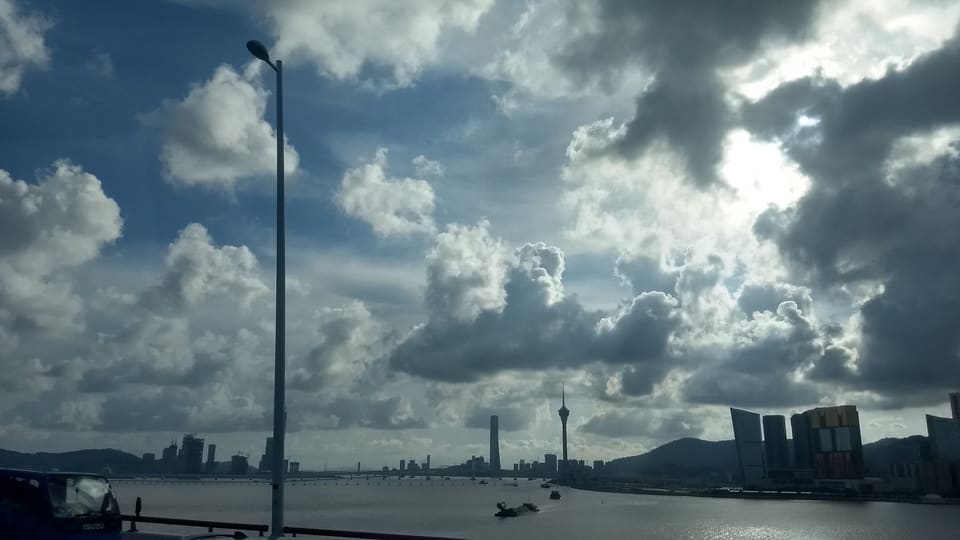
Wider skyline
End with distance to see how the historic centre sits inside contemporary Macao.
Photo essay
Façades, interiors, and the modern city
Before you go
Keep the route compact and observant
Walk the centre
The short distances contain much of the story. Comfortable footwear is more useful than a packed schedule.
Start early
Senado Square and St Paul’s become busy. An early start leaves more room to notice architecture.
Look above street level
Balconies, signs, upper façades, and rooflines reveal details that storefronts can hide.
Check access
Opening hours, public interiors, events, and conservation work can change the route.
Context
Official reading
Historical context was checked against UNESCO’s Historic Centre of Macao World Heritage entry.
Broader route context remains in the source travel guide.
Personal shortlist
Want to Go places around Macao
These pins come from the personal Google Maps Want to Go collection and fall inside this city’s mapped boundary or local radius. Every matching pin is available on the searchable map above.
Journal notes
Use this as a living travel record
Verify current access
Opening hours, permits, transport, weather, and local rules can change after a journal entry is written.
Read the map selectively
The saved list is a set of possibilities, not a checklist. Filter it and build a route around one compact area at a time.
Distinguish visits from ideas
Green journal stops are documented or photographed; red Want to Go pins remain future possibilities.
Add the next chapter here
Future descriptions and photographs now have one stable city page instead of being split among collection pages.