Travelled July 17, 2025 – July 20, 2025 · Published Aug 8, 2026 · 425 words
Agra: three Mughal visions in one landscape
A 2025 route through the Taj Mahal, Agra Fort, Fatehpur Sikri and the quieter river-edge view from Taj Nature Walk.
Journal entry
Notes from the journey
Agra is often reduced to one immaculate silhouette. The photographs from this 2025 visit tell a broader story: a marble memorial, a working imperial fort, an experimental capital and a wooded viewpoint all occupy the same Mughal landscape. Moving between them makes the ambitions of different emperors easier to read.
Archive note: the photographs in this journal come from Varghese Tony's personal travel collection. Historical context is independently researched from the authoritative sources linked at the end.
Morning marble and a garden of symmetry
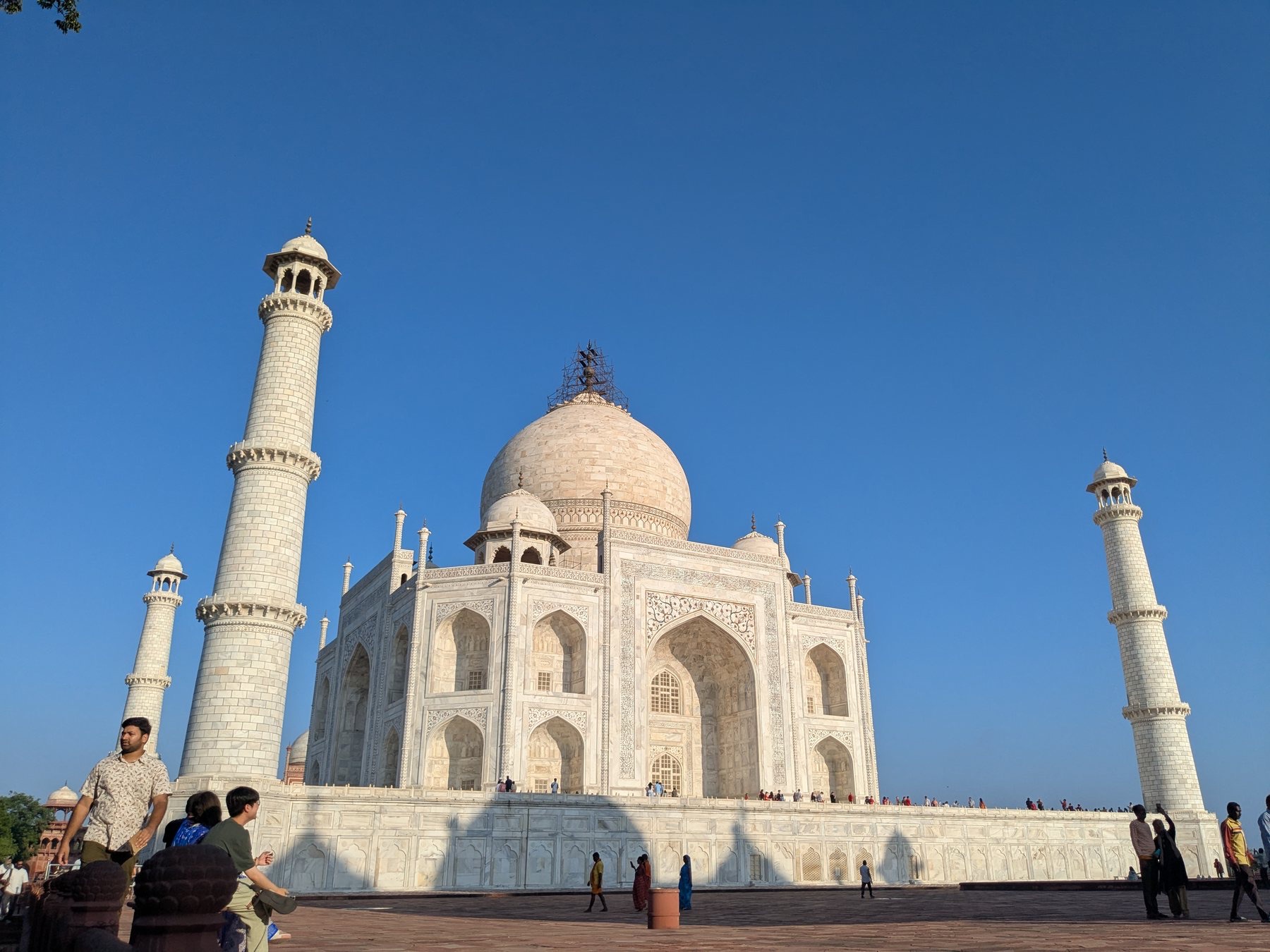
The Taj Mahal was commissioned by Shah Jahan as the mausoleum of Mumtaz Mahal, but its power comes from the complete ensemble: gateway, garden, reflecting axis, mosque, guest pavilion and river terrace. UNESCO describes the complex as a masterpiece of Mughal architecture. In person, the white marble is never simply white; changing light brings out warm, cool and translucent tones, while inlay and calligraphy reward a much slower look than the famous frontal view suggests.
A fort that was also a palace city
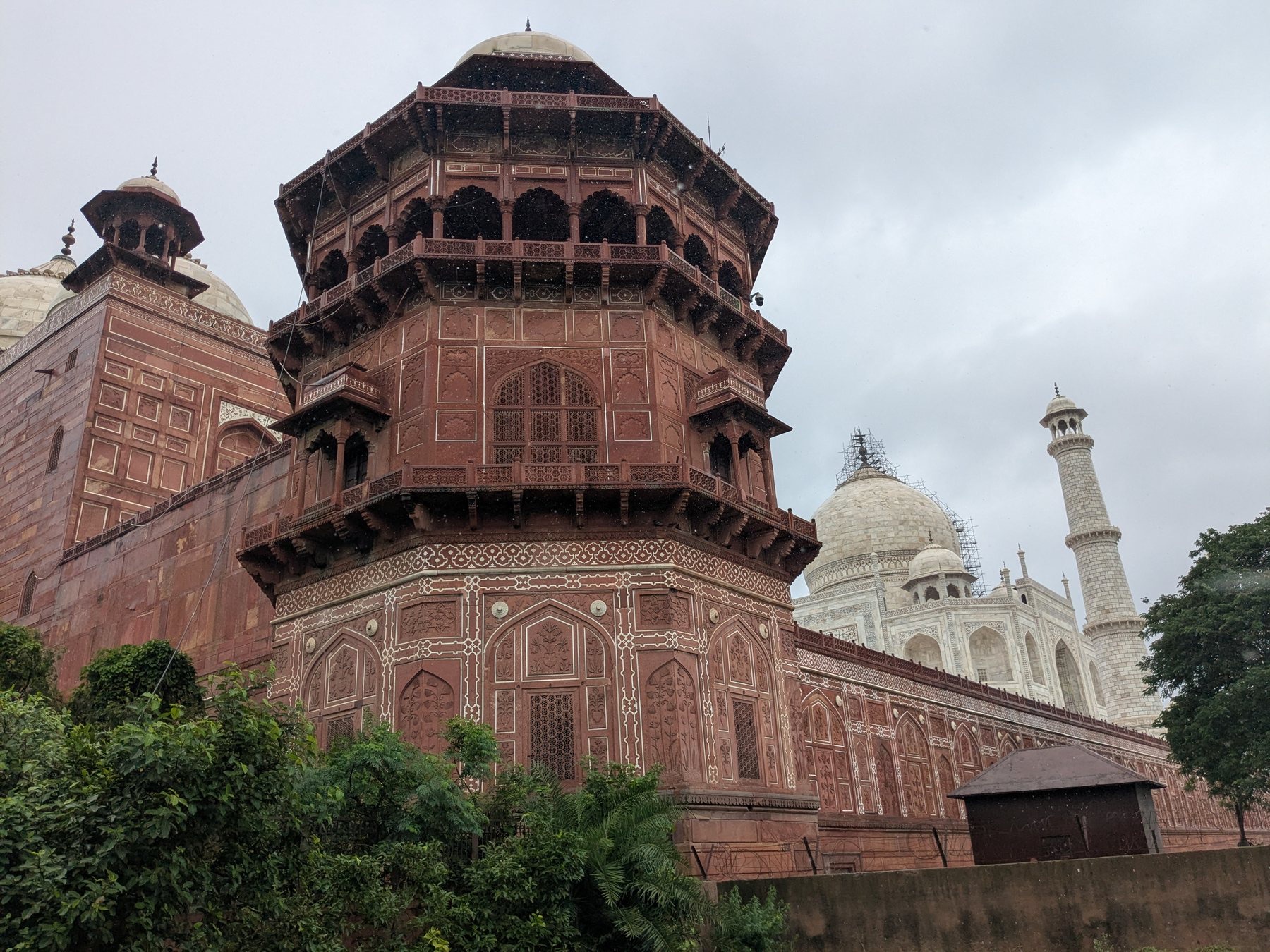
Agra Fort began as a red-sandstone stronghold under Akbar and accumulated palaces and audience halls under later Mughal rulers. Its walls speak the language of defence, yet the interior repeatedly opens into carved courts and river-facing rooms. The distant Taj view connects two chapters of the dynasty and also recalls Shah Jahan's final years, when contemporary accounts place him under confinement in the fort after Aurangzeb took power.
Akbar's short-lived capital
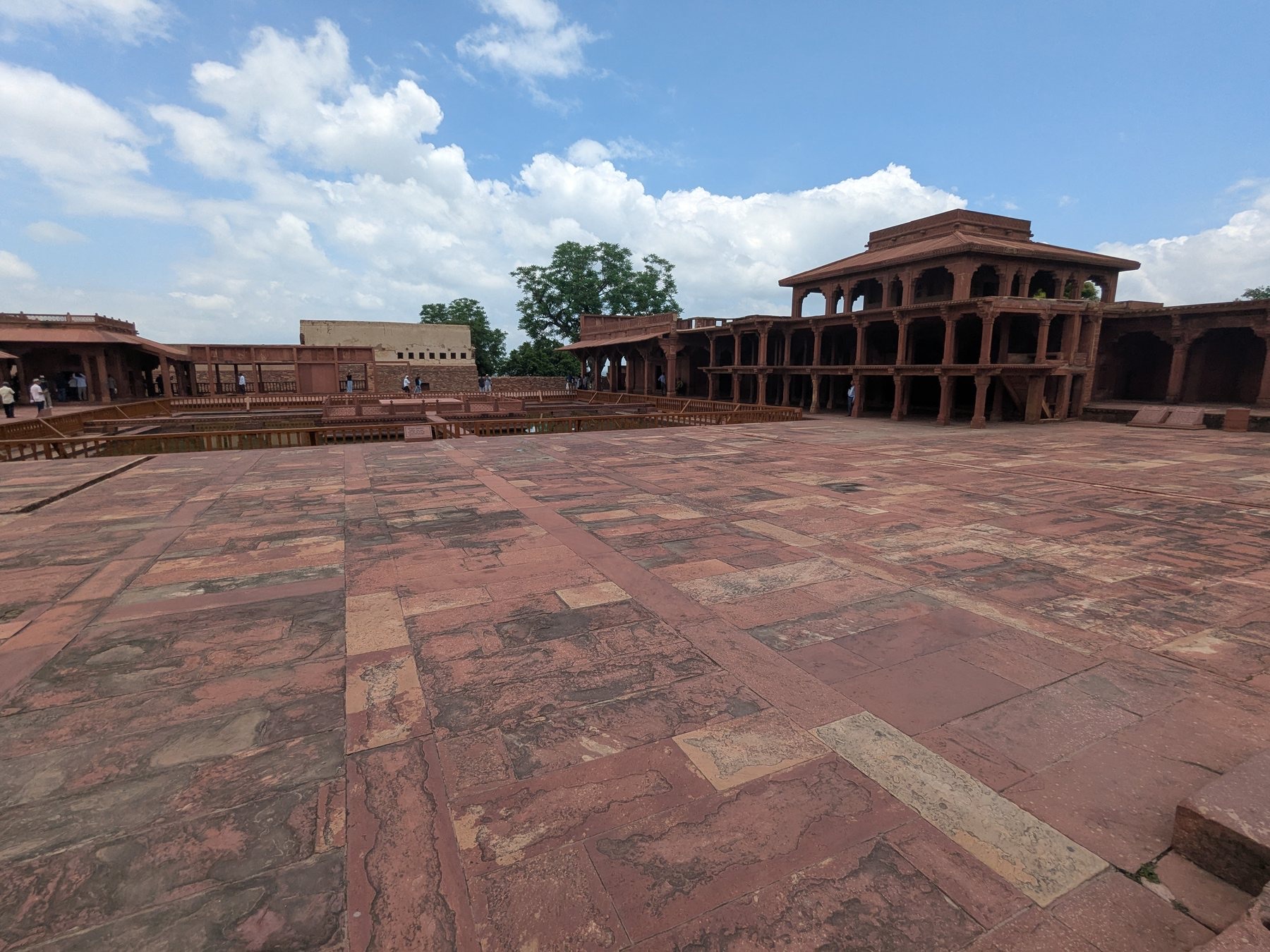
At Fatehpur Sikri, Akbar attempted something different: an imperial capital planned across a ridge with administrative, residential and sacred precincts. UNESCO dates its principal construction to the 1570s and notes that it served as capital for only about a decade. The red sandstone courts still show how architecture could organise ceremony and access, while the Jama Masjid and the shrine of Salim Chishti keep the complex connected to living devotion.
Stepping back from the postcard
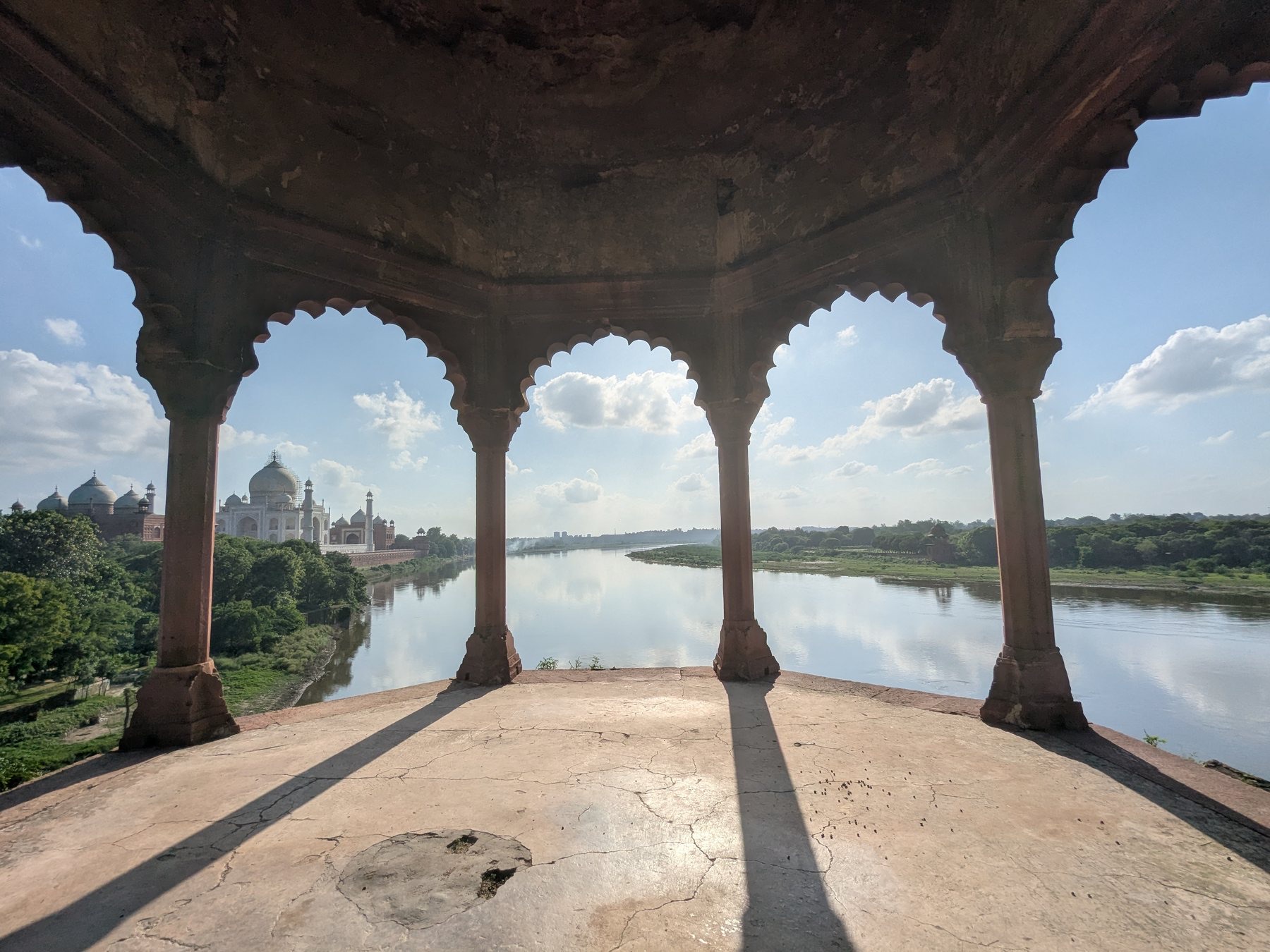
Taj Nature Walk changes the scale again. Trees and scrub interrupt the perfect axis, and the mausoleum appears as part of the Yamuna landscape rather than an isolated object. It is a useful final stop: after entering the celebrated monuments, this quieter path restores distance and makes the relationships between river, garden and skyline visible.
Research and planning sources
The historical notes above are paraphrased from the following official heritage and tourism resources. Opening hours, tickets, conservation closures, trail access and photography rules can change; check the linked authorities before travelling.
Places from the journey
Saved places
World Heritage
Taj Mahal
Shah Jahan's marble mausoleum and charbagh garden beside the Yamuna.
Open in Google Maps ↗World Heritage
Agra Fort
The Mughal imperial citadel whose palaces look down the river toward the Taj.
Open in Google Maps ↗World Heritage
Fatehpur Sikri
Akbar's planned sixteenth-century capital in red sandstone.
Open in Google Maps ↗Park and viewpoint
Taj Nature Walk
A green river-edge circuit with less familiar views of the Taj Mahal.
Open in Google Maps ↗