Travelled September 26, 2024 – September 28, 2024 · Published Aug 8, 2026 · 497 words
Delhi in red stone, white marble and open sky
Two September days moving from the Red Fort's sandstone walls to India Gate at sunset, then through Jantar Mantar, the Qutb complex and the quiet geometry of the Lotus Temple.
Journal entry
Notes from the journey
Delhi did not unfold as one city. Over two late-September days it changed scale and material constantly: sandstone ramparts in Old Delhi, a ceremonial avenue under an enormous sky, precise astronomical forms in the middle of the modern city, a medieval minaret, and finally a house of worship shaped like a flower. These photographs became my route back through those layers.
Day one — red sandstone and an open avenue
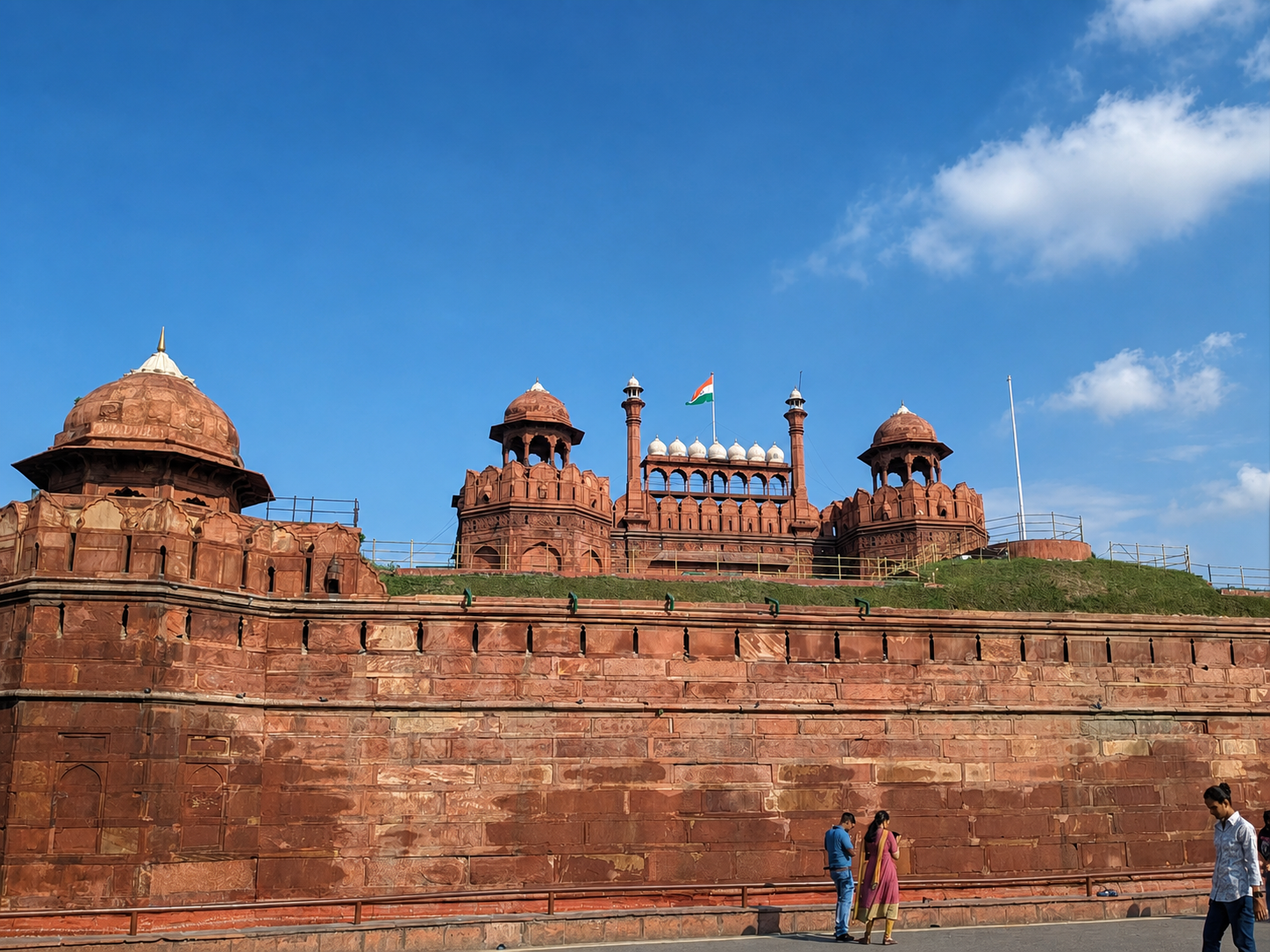
The Red Fort was my first measure of Delhi. From below, the long defensive wall looks almost continuous; closer in, domed towers, gateways and changes in the stone break that mass into smaller details. Passing from the public road into the complex also changed the pace. The fort is not a single façade but a sequence of gates, lawns, pavilions and museum rooms, with the modern city never very far beyond the walls.
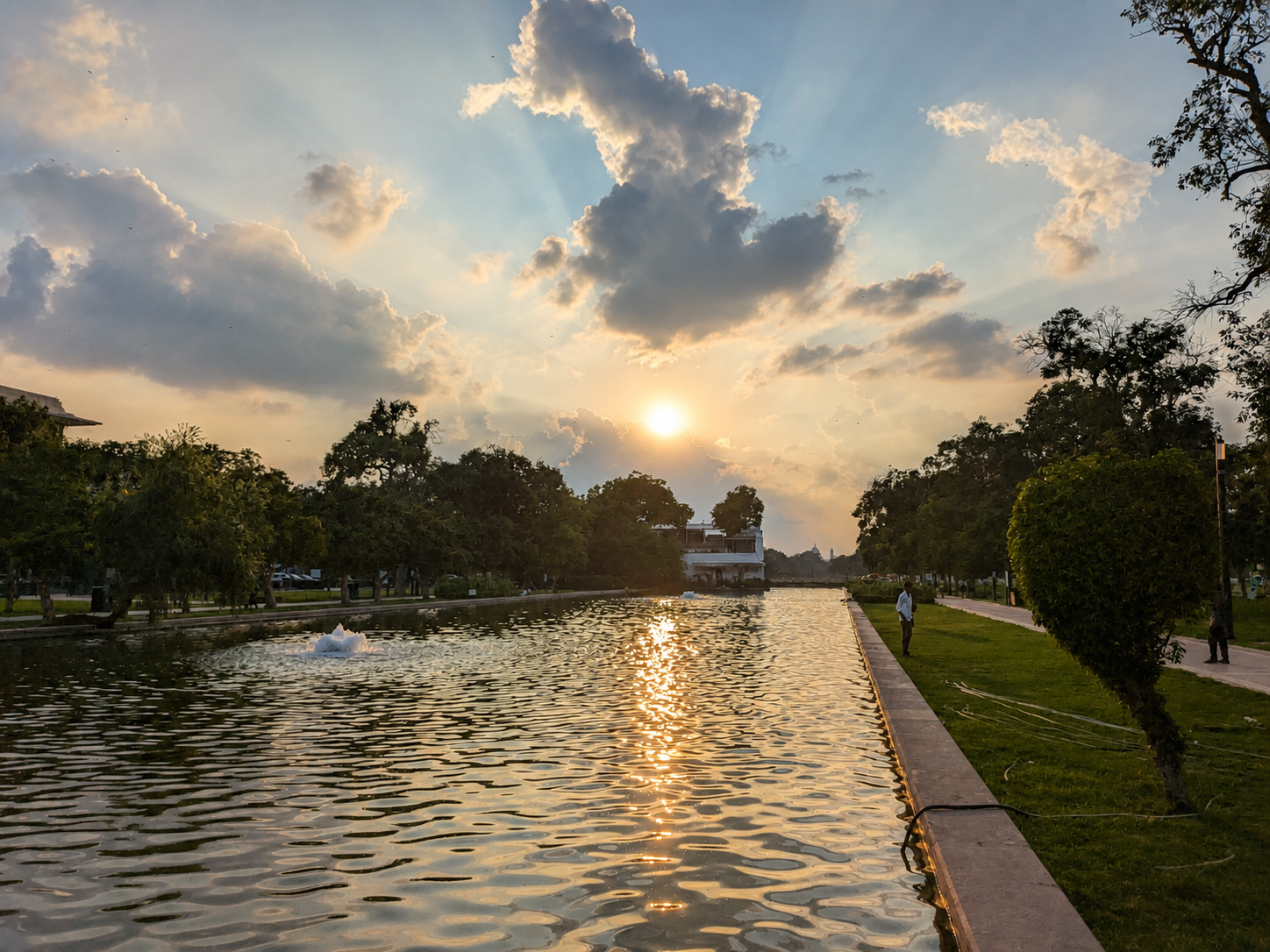
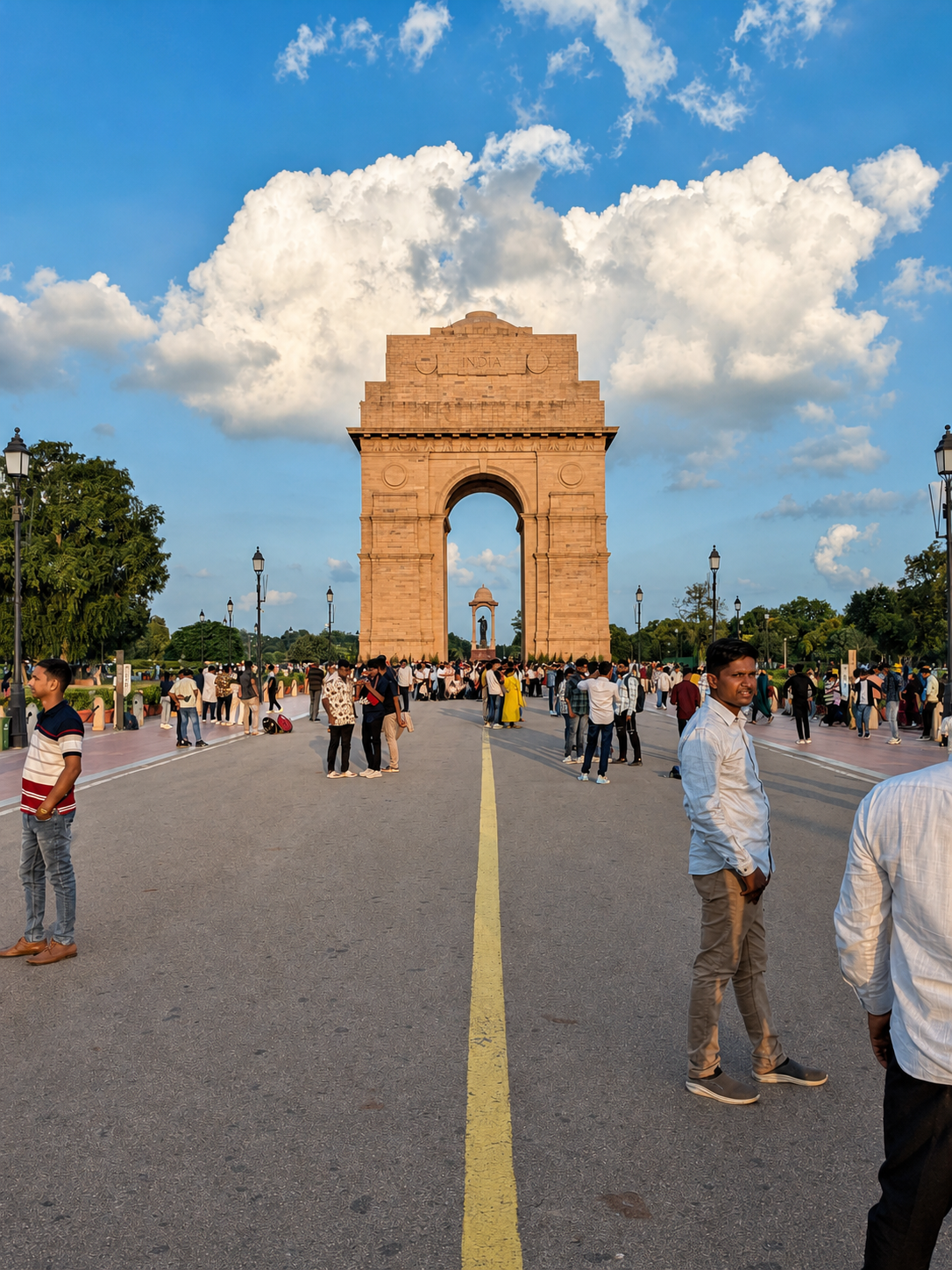
By evening the city opened out at India Gate. The memorial arch is the obvious landmark, but what stayed with me was the space around it: families walking, people pausing for photographs, long lines of trees, and the changing light reflected beside Kartavya Path. The monument felt less isolated than photographs suggest. It belonged to the movement and noise of the avenue around it.
Day two — instruments, inscriptions and petals
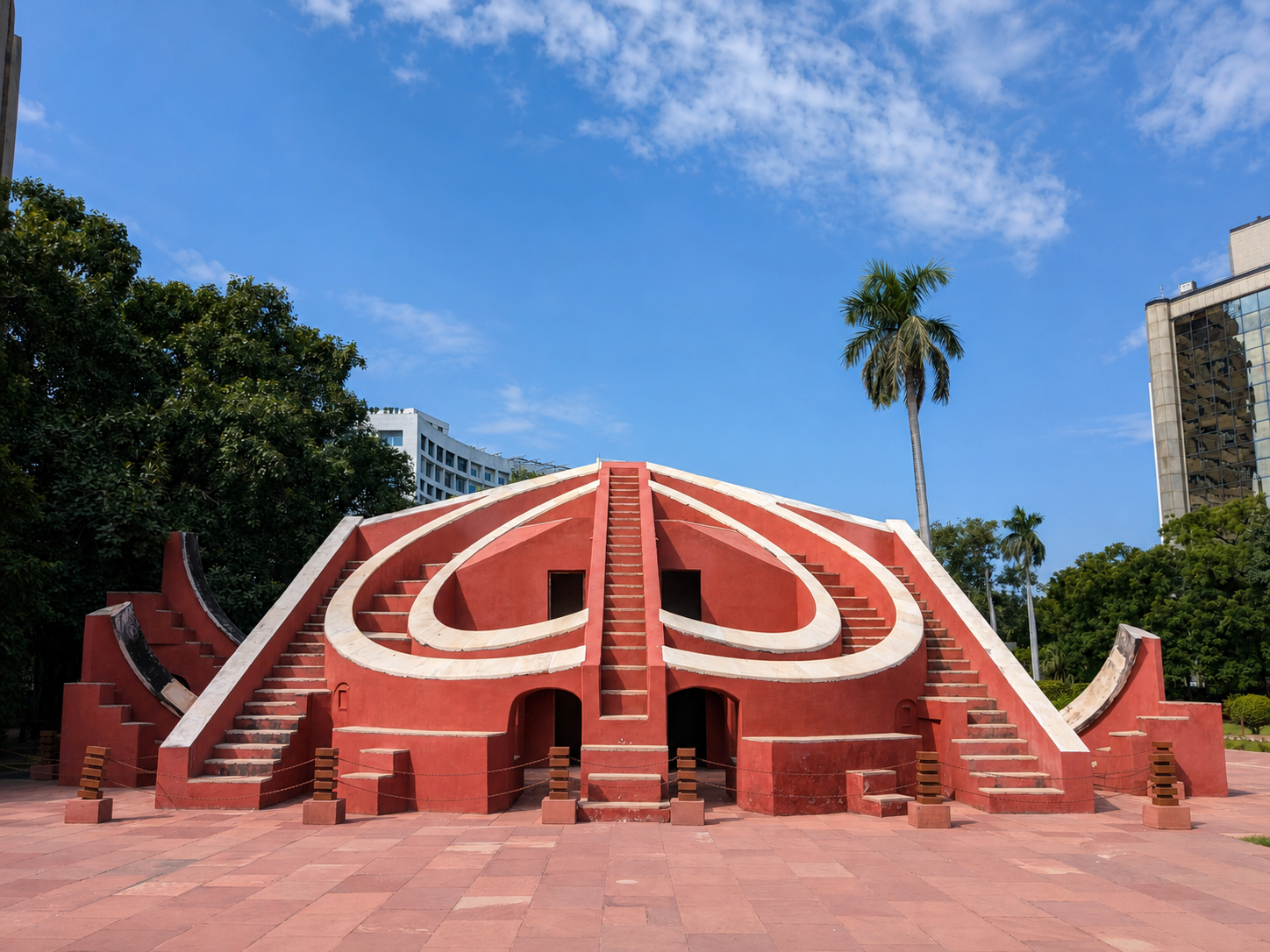
Jantar Mantar makes observation feel architectural. Commissioned by Sawai Jai Singh II in 1724, its instruments turn arcs, stairways and carefully aligned surfaces into tools for reading time and the sky. The Samrat, Jai Prakash, Ram and Misra Yantras are easier to remember as spaces than as diagrams: you walk around curves and shadows that were designed to measure things far beyond the enclosure.
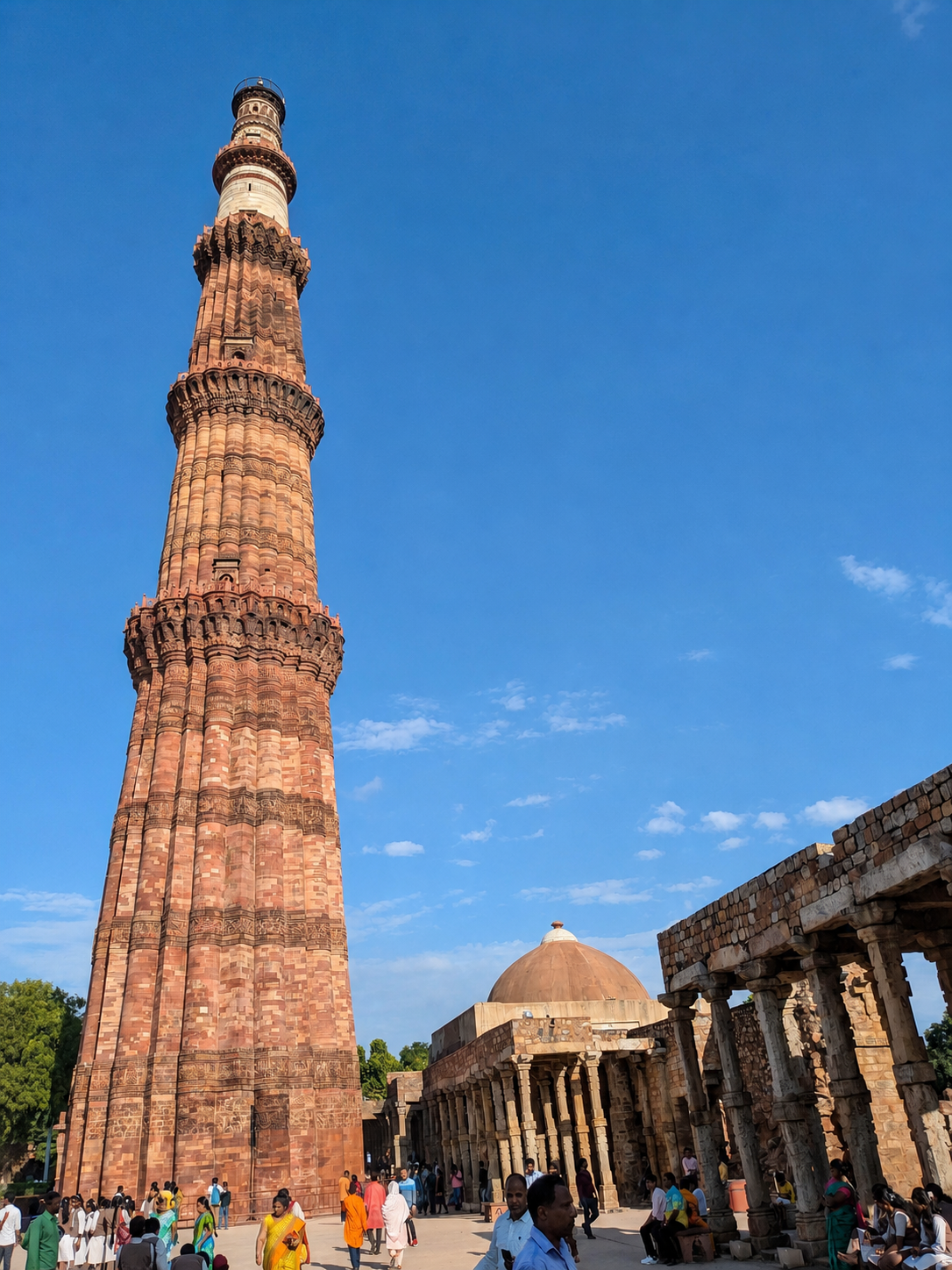
At the Qutb complex, the minaret dominates every first glance, yet the visit became more interesting when I looked back down. Bands of carving circle the tower, reused and newly carved stone meet in the surrounding arcades, and unfinished ambitions sit beside completed monuments. It is a World Heritage site best read slowly, as a complex of changing plans and periods rather than a single vertical landmark.
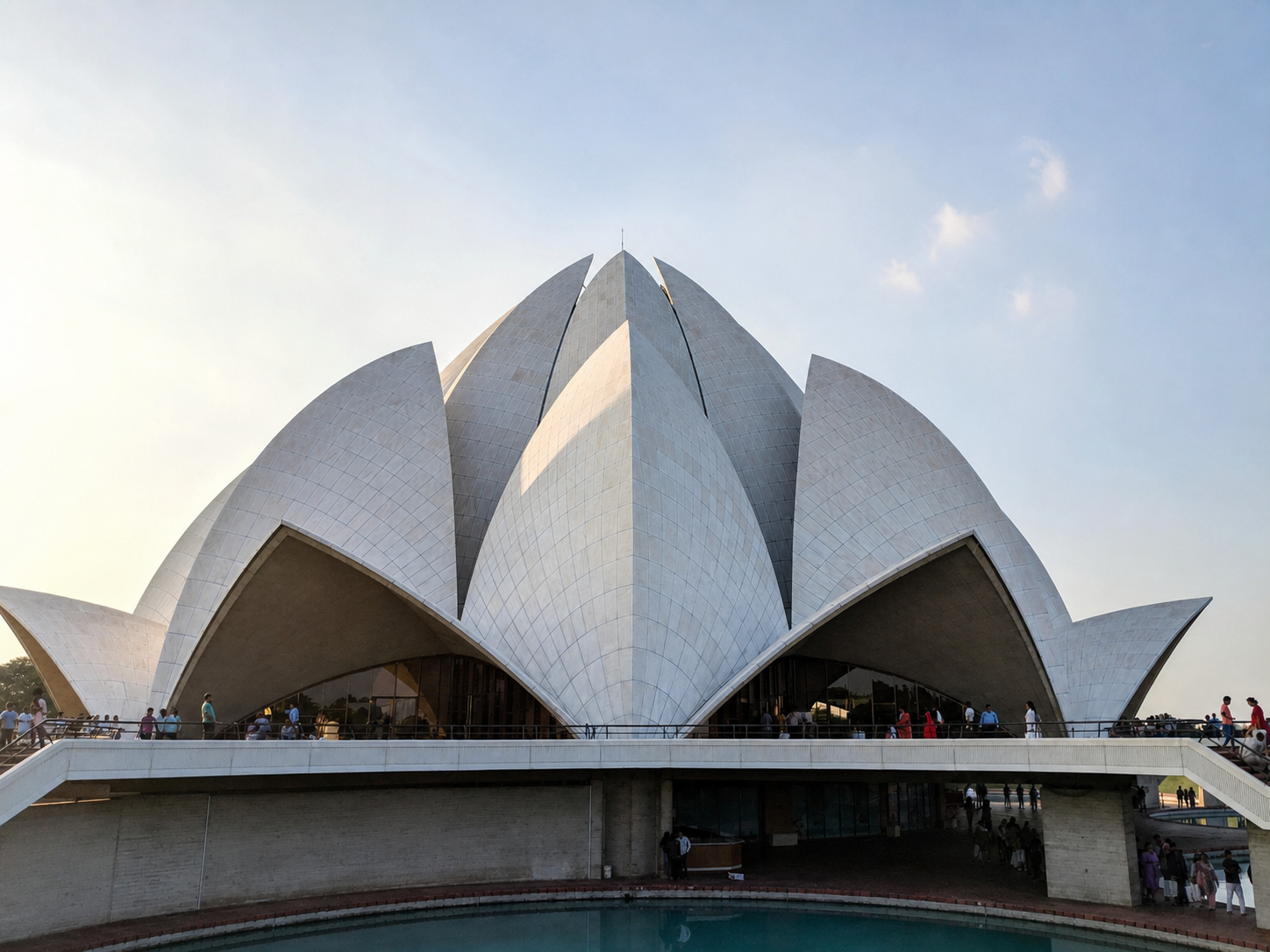
The Lotus Temple was the quietest finish to the route. Completed in 1986 and designed by Fariborz Sahba, the Bahá'í House of Worship is formed from twenty-seven marble-clad petals arranged in groups of three around nine sides. Seen close up, the building is less like a flat symbol and more like overlapping shells. Inside, the absence of icons brings attention back to the shared silence of the room.
What stayed after the route
Delhi rewards changing the frame: look up for scale, then back down for the marks, materials and people that make each monument part of a living city.
A practical note for a future visit: spread these places across at least two days, leave time for security queues and walking, and verify current opening days, ticket rules, photography restrictions and access notices before setting out. Delhi's distances can look short on a map and still take time on the ground.
Places from the journey
Saved places
World Heritage
Red Fort
Mughal citadel and museum complex in Old Delhi.
Open in Google Maps ↗Monument
India Gate
Memorial arch and the broad ceremonial landscape of Kartavya Path.
Open in Google Maps ↗Science and heritage
Jantar Mantar
Sawai Jai Singh II's eighteenth-century astronomical observatory.
Open in Google Maps ↗World Heritage
Qutb Minar
The minaret and the layered monuments of the Qutb complex.
Open in Google Maps ↗Sacred architecture
Lotus Temple
Bahá'í House of Worship known for its lotus-shaped marble form.
Open in Google Maps ↗