Travelled October 3, 2025 · Published Aug 8, 2026 · 309 words
Ha Long Bay: a voyage through drowned limestone
A 2025 journal of changing light, cave chambers and a cruise through the marine karst of Ha Long Bay–Cat Ba Archipelago.
Journal entry
Notes from the journey
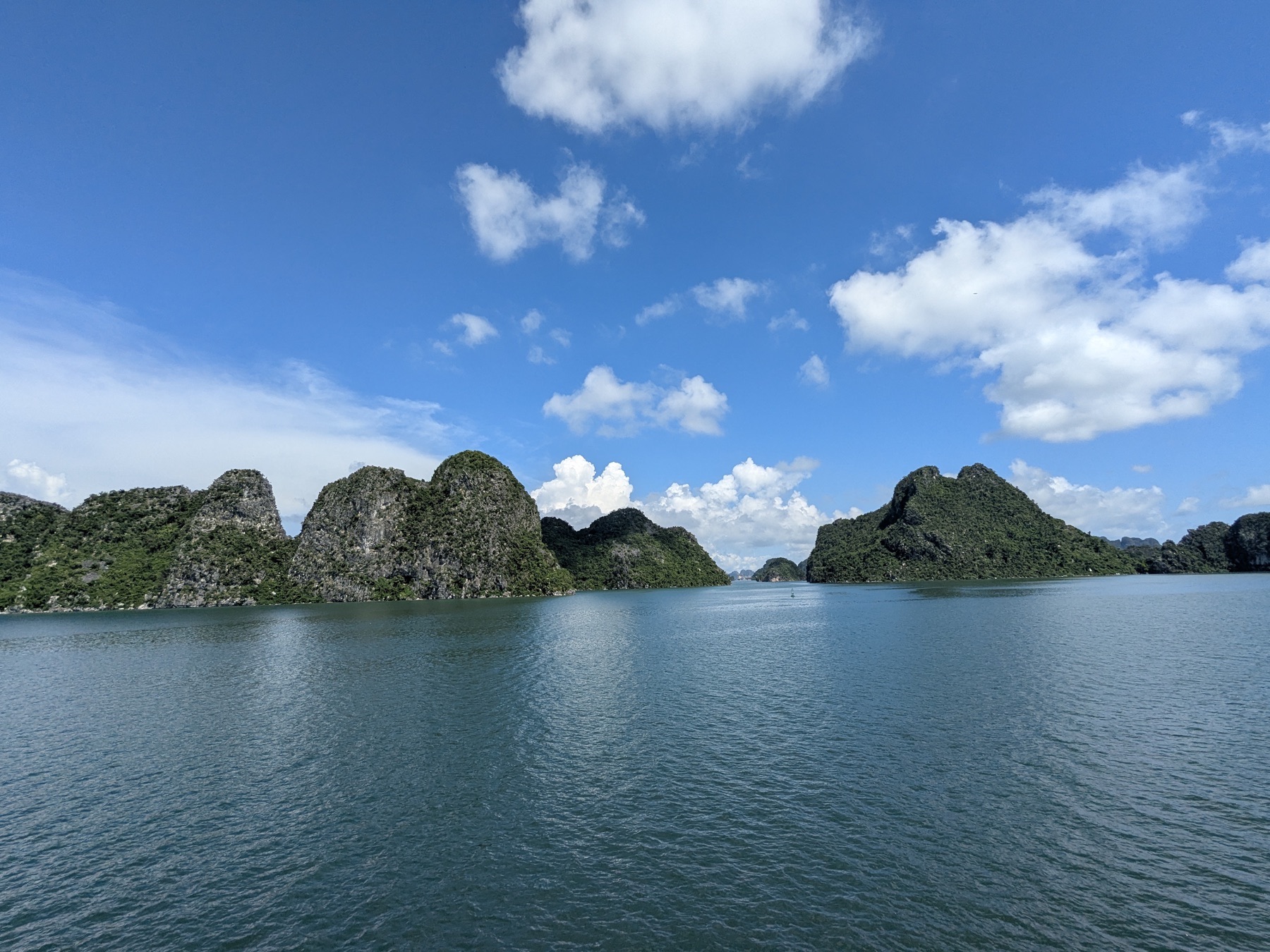
Ha Long Bay is not a static panorama. From the deck in 2025, limestone towers continually overlapped and separated as the boat moved, while sun, mist and twilight changed their apparent scale. The journey becomes more meaningful when the spectacular view is connected to the geology, ecosystems and management pressures of a heavily visited World Heritage seascape.
Archive note: the photographs in this journal come from Varghese Tony's personal travel collection. Historical context is independently researched from the authoritative sources linked at the end.
A landscape formed by water entering karst
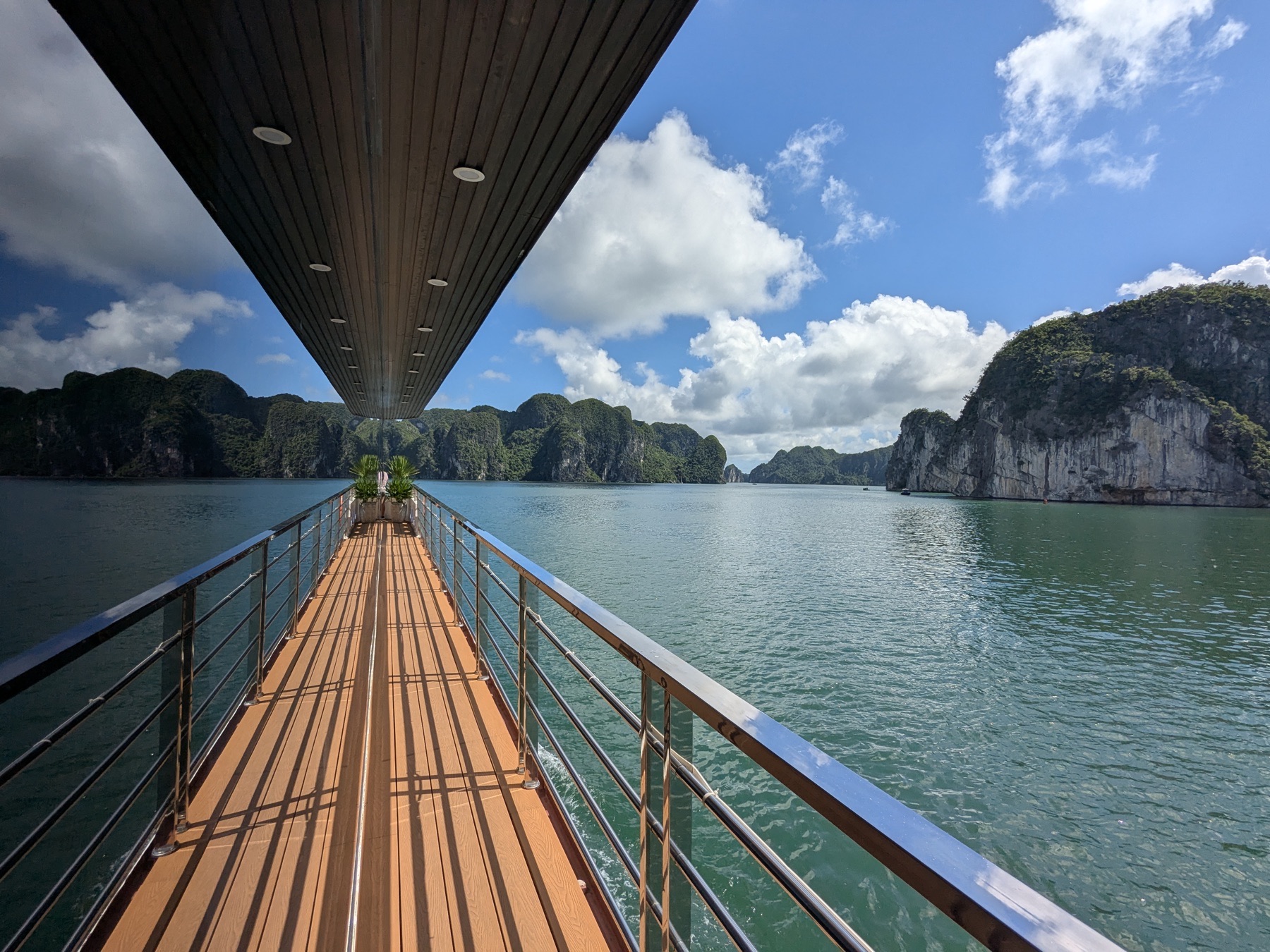
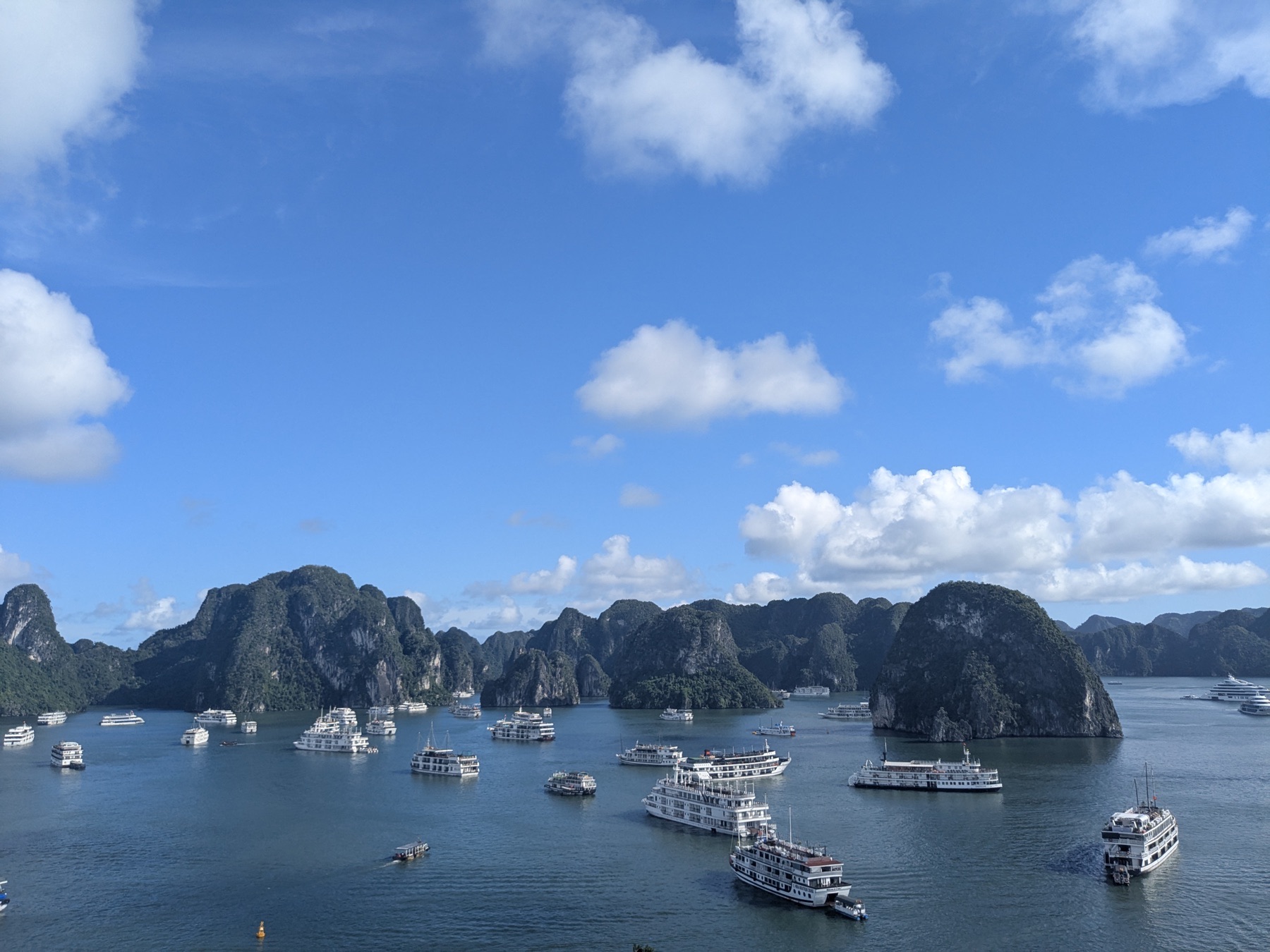
UNESCO describes Ha Long Bay–Cat Ba Archipelago as the world's most extensive example of marine-invaded tower karst. Limestone dissolved and eroded over immense time before rising seas flooded valleys, leaving clusters and isolated towers above the water. Seeing the formations from deck level and from a high overlook makes the drowned topography easier to imagine.
Inside the limestone
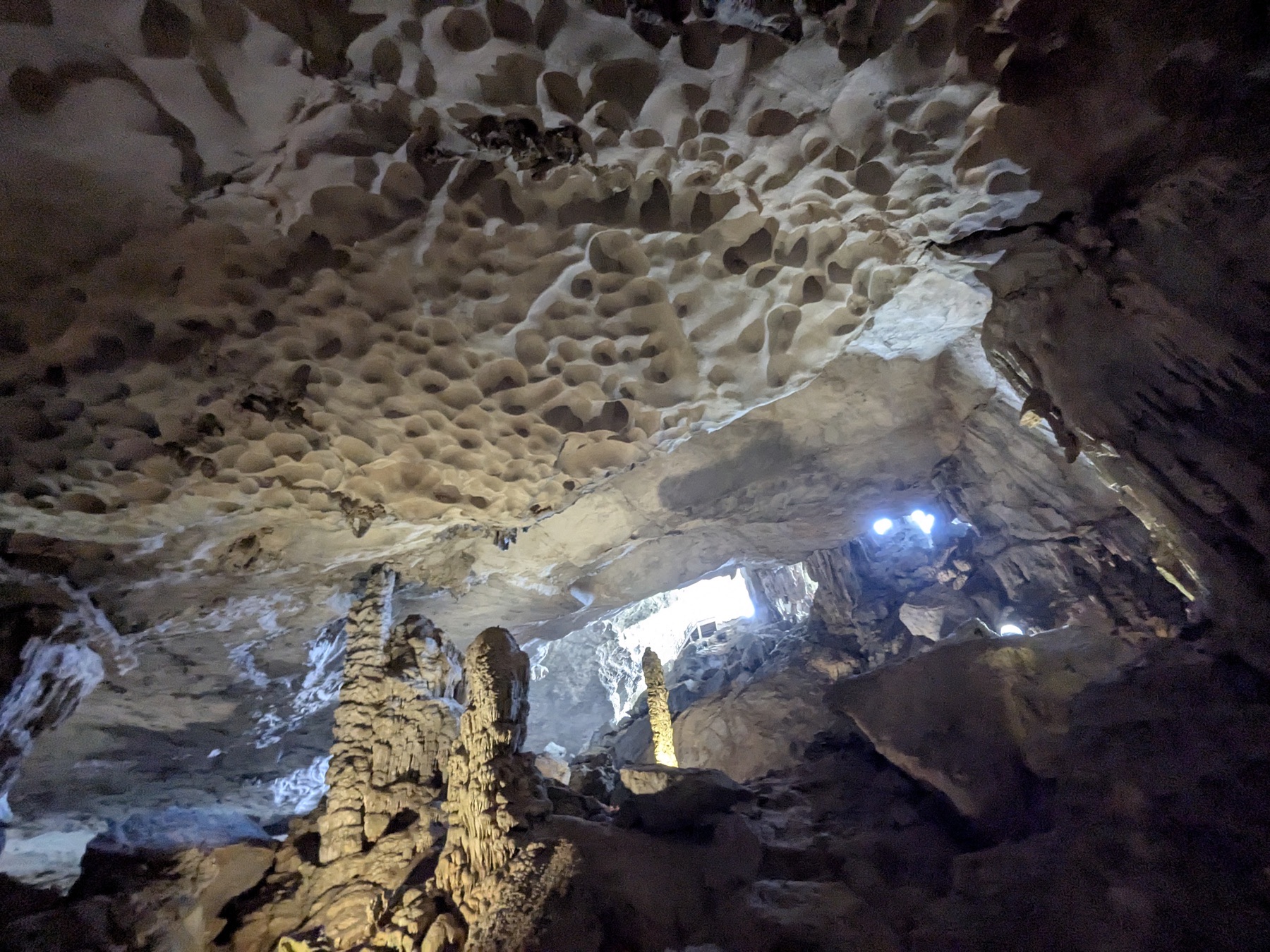
Sung Sot Cave reveals another stage of karst formation through chambers, stalactites and flowstone. Lighting makes the shapes legible but can also turn geology into theatre. Staying on the managed path protects both visitors and fragile surfaces, and quieter pauses make it possible to notice texture rather than only scale.
Sunset is not the end of the story
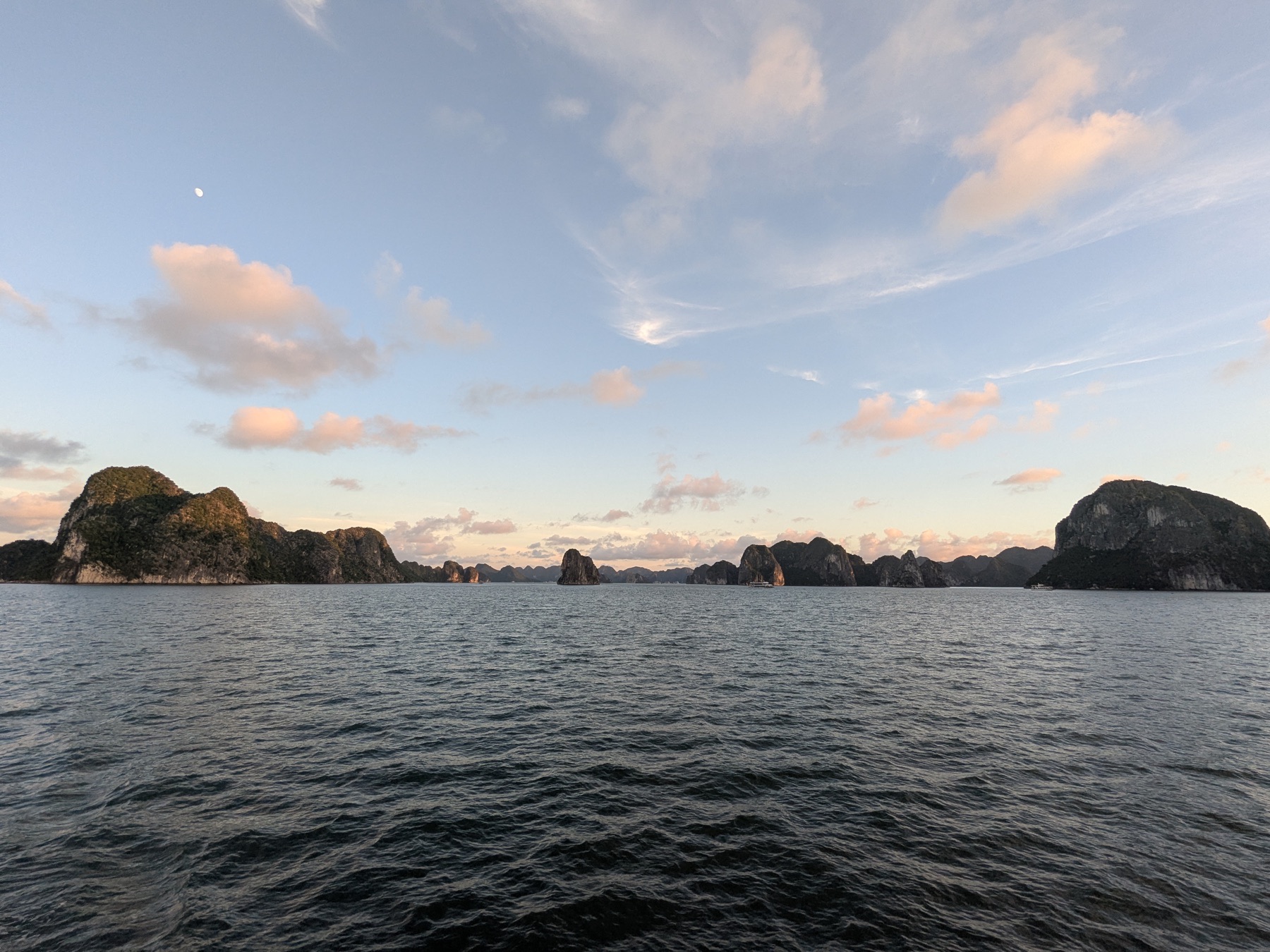
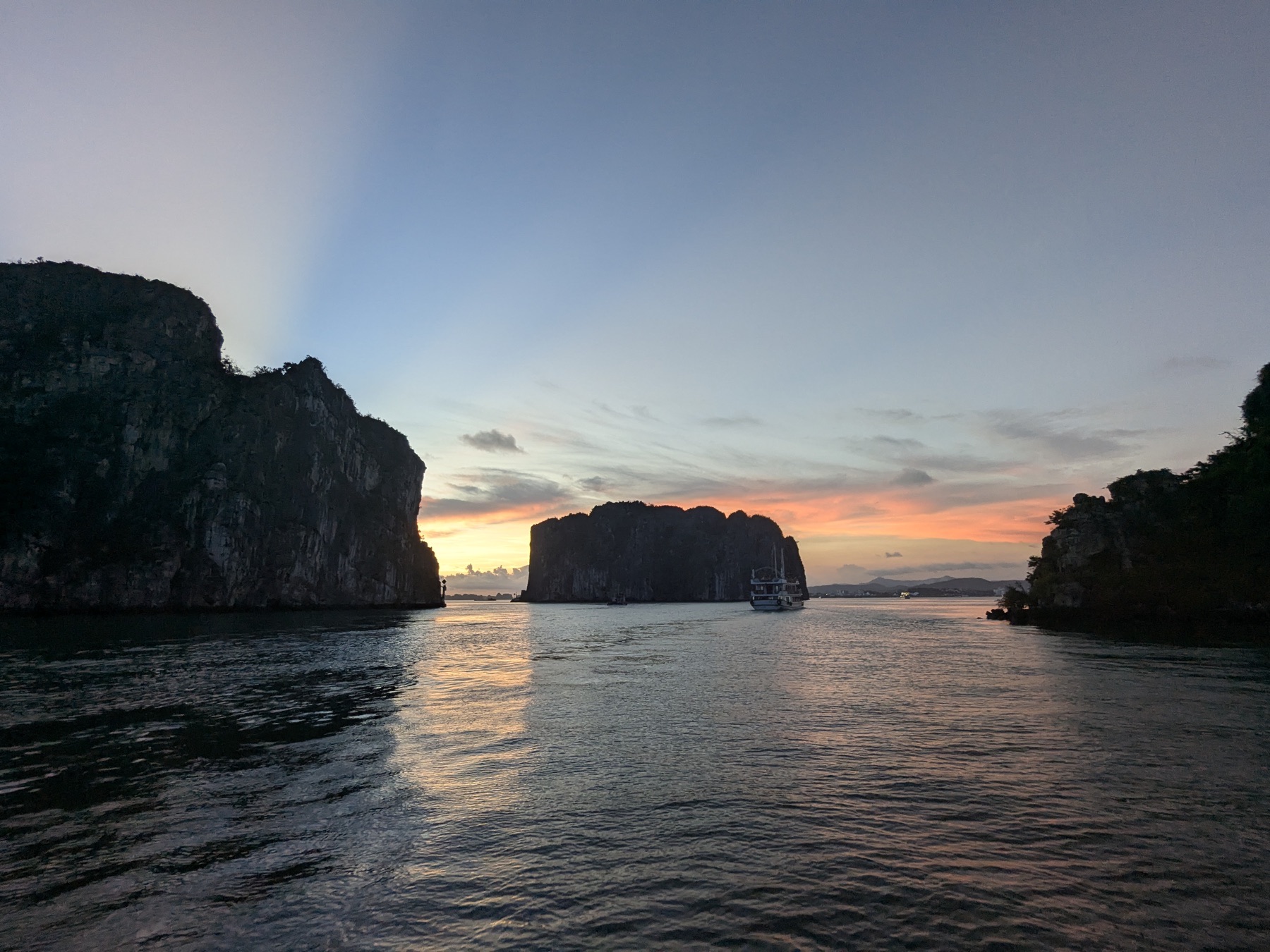
The bay is most atmospheric as the colour drains from the water and silhouettes simplify. Yet cruise traffic, wastewater, waste and carrying capacity are serious management concerns. UNESCO has repeatedly called for tourism to remain within ecological limits. Choosing responsible operators and following protected-area rules are part of how a beautiful evening becomes a sustainable memory.
Research and planning sources
The historical notes above are paraphrased from the following official heritage and tourism resources. Opening hours, tickets, conservation closures, trail access and photography rules can change; check the linked authorities before travelling.
Places from the journey
Saved places
World Heritage
Ha Long Bay
A marine-invaded tower-karst landscape in northeastern Vietnam.
Open in Google Maps ↗Cave and geology
Sung Sot Cave
A large show cave within the Bo Hon island group.
Open in Google Maps ↗Viewpoint and coast
Ti Top Island
A small island with a steep overlook across the bay.
Open in Google Maps ↗Journey and transport
Tuan Chau International Marina
A principal departure point for Ha Long cruises.
Open in Google Maps ↗