Travelled July 23, 2016 – July 24, 2016 · Published Aug 8, 2026 · 310 words
Hampi: reading a capital through stone and river
A return to the 2016 Hampi archive, following Virupaksha, the royal centre and the Tungabhadra landscape through the remains of Vijayanagara.
Journal entry
Notes from the journey
The 2016 Hampi photographs began with temple towers and boulder fields, but the site becomes more legible when treated as a city rather than a collection of ruins. Vijayanagara's capital stretched across a vast Tungabhadra landscape, joining sacred precincts, markets, waterworks, defences and a royal centre.
Archive note: the photographs in this journal come from Varghese Tony's personal travel collection. Historical context is independently researched from the authoritative sources linked at the end.
Virupaksha and the living sacred centre
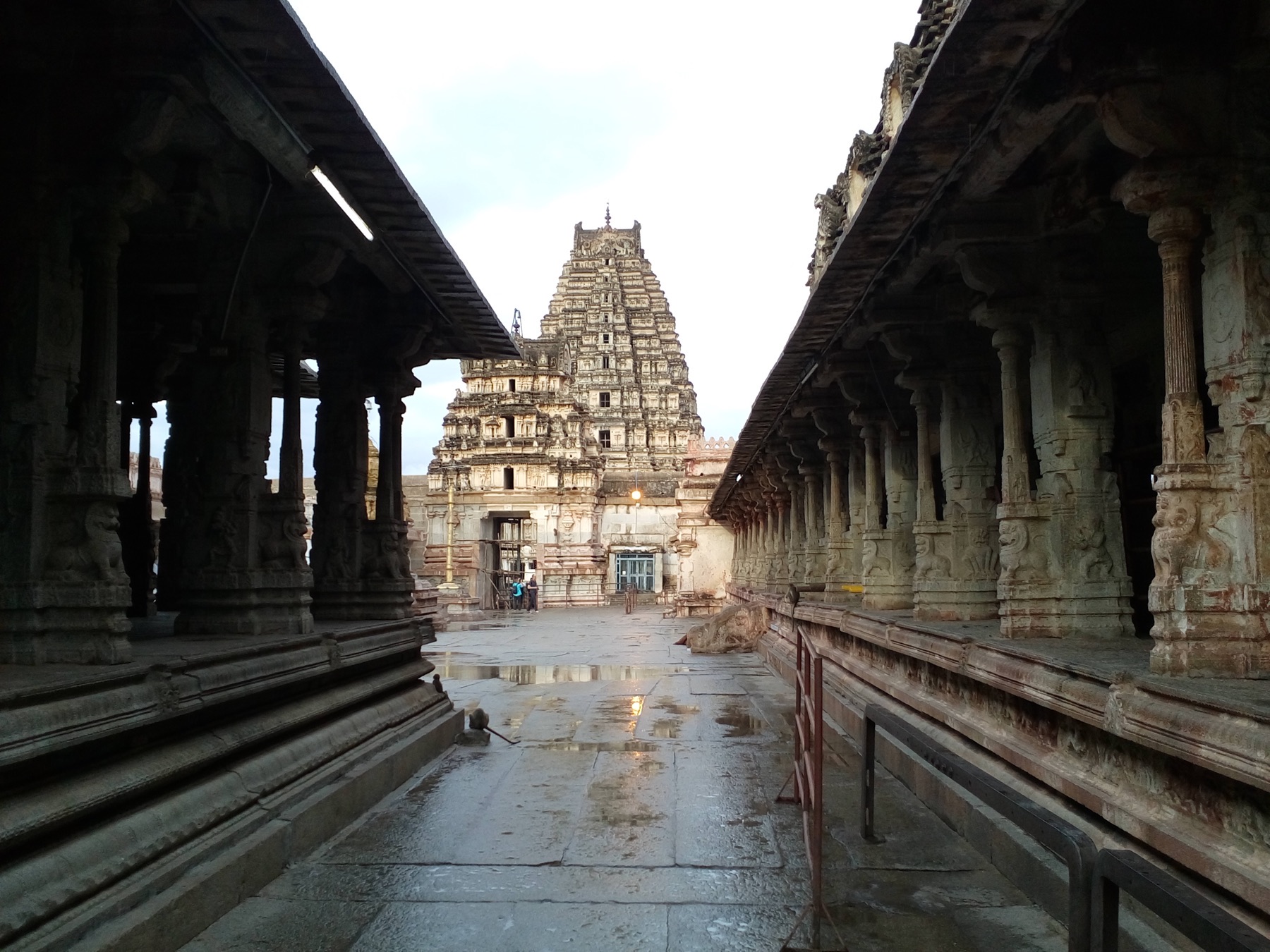
Virupaksha Temple remains active, giving Hampi a continuity that the word ruins can obscure. Its gopuram closes the western end of Hampi Bazaar, while Hemakuta Hill rises beside it with earlier shrines and long views. The relationship between temple, processional street, river and hill shows how sacred geography organised the city.
A capital larger than the monuments
UNESCO records more than 1,600 surviving elements across the property: temples, gateways, forts, stables, tanks, canals and civic structures. That scale changes the experience of moving between the royal enclosure and the Vittala complex. Empty ground is not blank space; it once carried suburbs, bazaars and managed water. The landscape itself is part of the archaeological record.
1565, abandonment and what endured
Vijayanagara flourished from the fourteenth to sixteenth centuries and was defeated by a Deccan coalition in 1565. Courtly and commercial life changed dramatically after the conquest, but worship, memory and settlement did not simply stop. Hampi today is therefore both a World Heritage archaeological landscape and a lived place, one that asks visitors to move carefully through farms, villages and temples as well as celebrated monuments.
Research and planning sources
The historical notes above are paraphrased from the following official heritage and tourism resources. Opening hours, tickets, conservation closures, trail access and photography rules can change; check the linked authorities before travelling.
Places from the journey
Saved places
Sacred World Heritage
Virupaksha Temple Hampi
A living temple anchoring Hampi Bazaar and the sacred centre.
Open in Google Maps ↗World Heritage
Vijaya Vittala Temple
A major temple complex known for its stone chariot and pillared halls.
Open in Google Maps ↗Royal heritage
Lotus Mahal
An elegant pavilion in the Zenana enclosure of the royal centre.
Open in Google Maps ↗Temple landscape
Hemakuta Hill Temple Complex
Granite shrines and broad sunset views above the bazaar.
Open in Google Maps ↗