Travelled July 21, 2025 – July 23, 2025 · Published Aug 8, 2026 · 359 words
Jaipur: astronomy, façades and the road to Amer
A 2025 Jaipur journal linking the planned Pink City to Hawa Mahal, Jantar Mantar and the hill-palace courts of Amer.
Journal entry
Notes from the journey
Jaipur rewards reading at two scales. From above, it is an eighteenth-century planned city laid out for trade and court life. At street level, that plan becomes a sequence of bazaars, latticed windows, giant instruments and shaded courtyards. The 2025 photographs follow that shift from the Pink City to Amer's older hill capital.
Archive note: the photographs in this journal come from Varghese Tony's personal travel collection. Historical context is independently researched from the authoritative sources linked at the end.
A façade made for watching
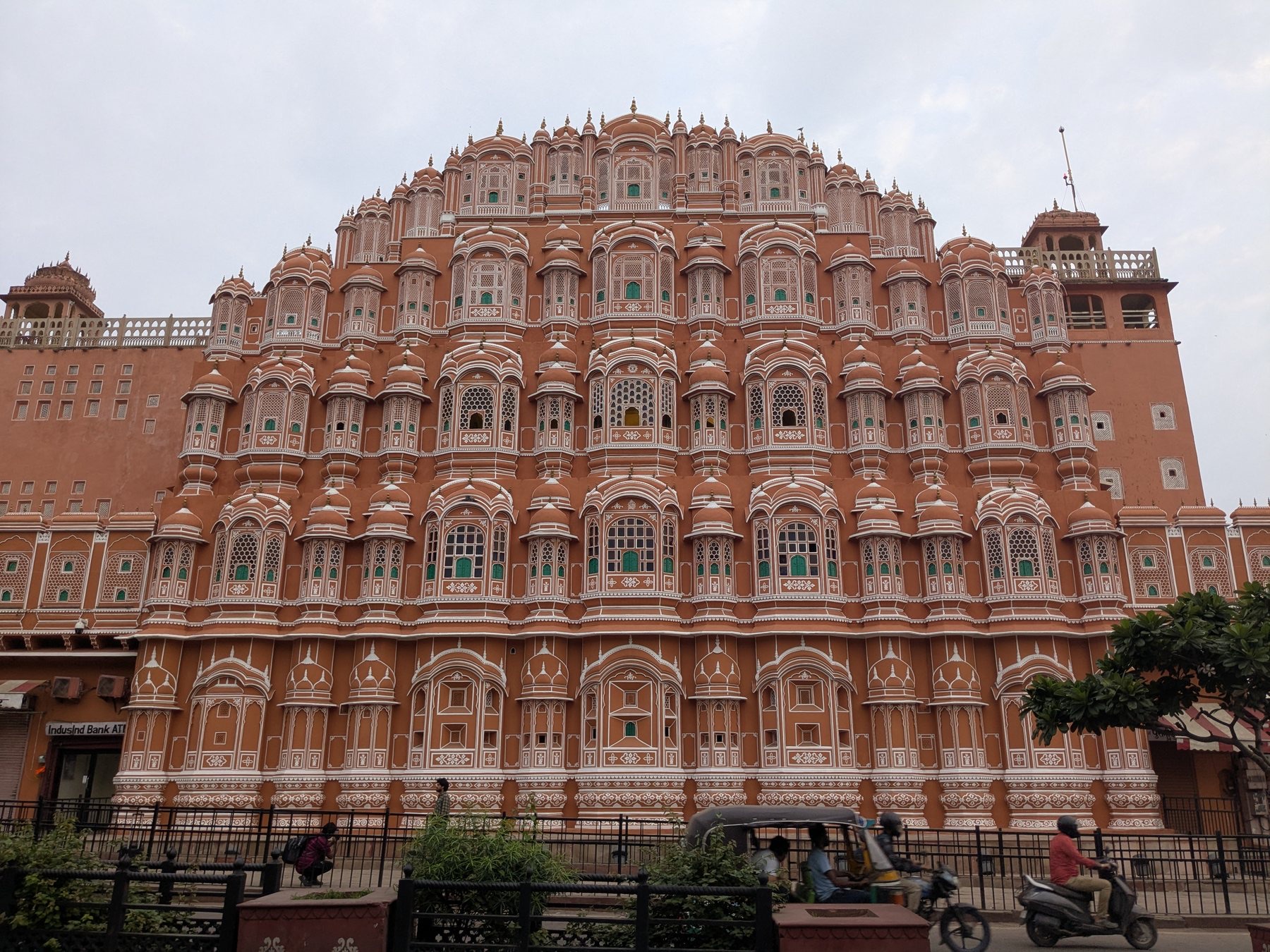
Hawa Mahal was built in 1799 under Sawai Pratap Singh. Its celebrated street elevation behaves less like the front of a conventional palace than an inhabited screen: hundreds of small openings brought air into narrow chambers and allowed members of the royal household to observe processions and bazaar life. The building belongs to the walled city's larger urban theatre, not merely to a single postcard angle.
When astronomy becomes architecture
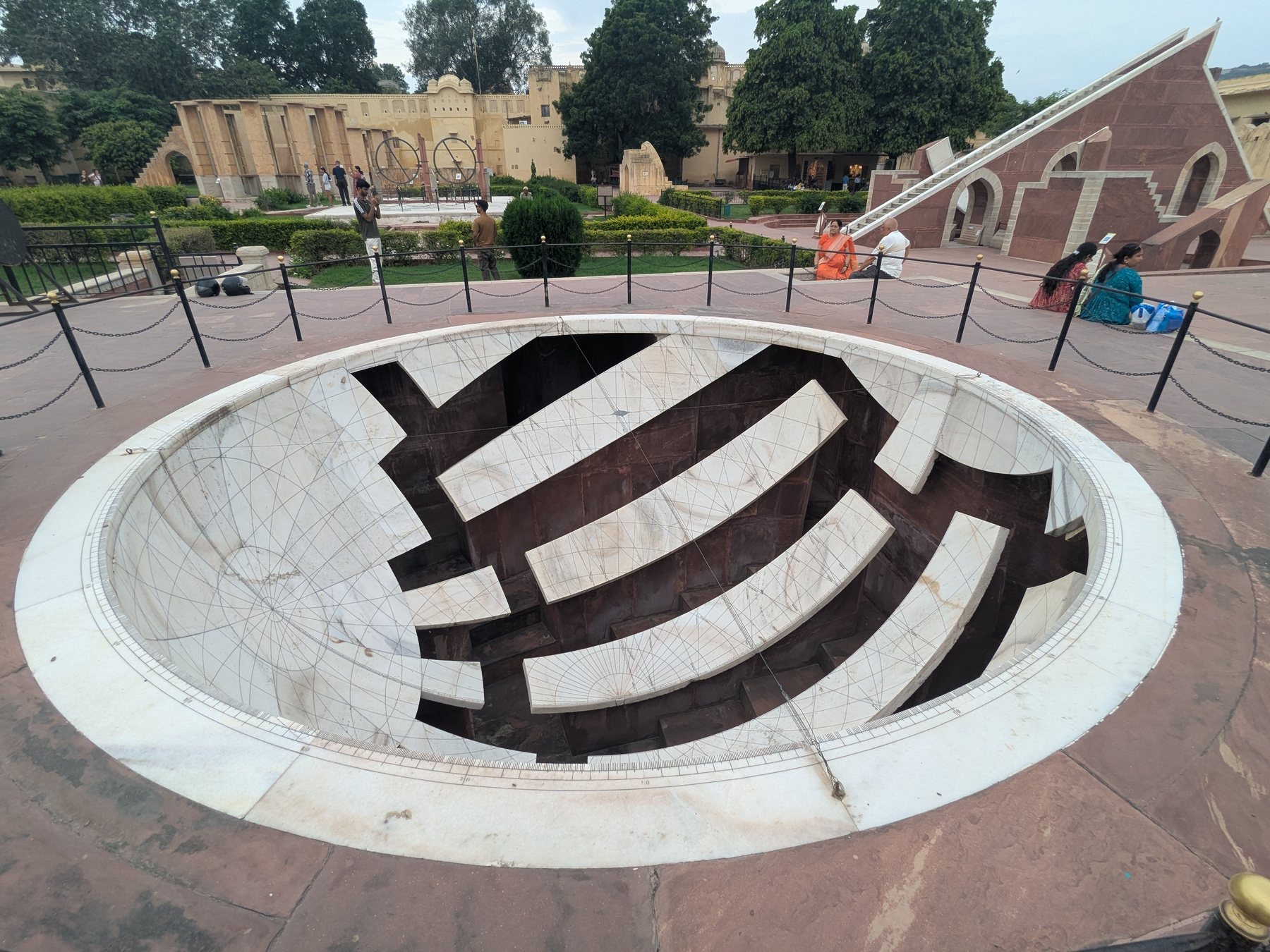
At Jantar Mantar, Sawai Jai Singh II turned naked-eye astronomy into masonry. UNESCO identifies about twenty principal fixed instruments, designed to observe celestial positions and measure time at a monumental scale. Walking among them makes their purpose unexpectedly physical: stairs, arcs and shadows turn the visitor into part of an instrument, while the observatory's position beside City Palace ties scientific ambition directly to the court.
From the new city back to Amer
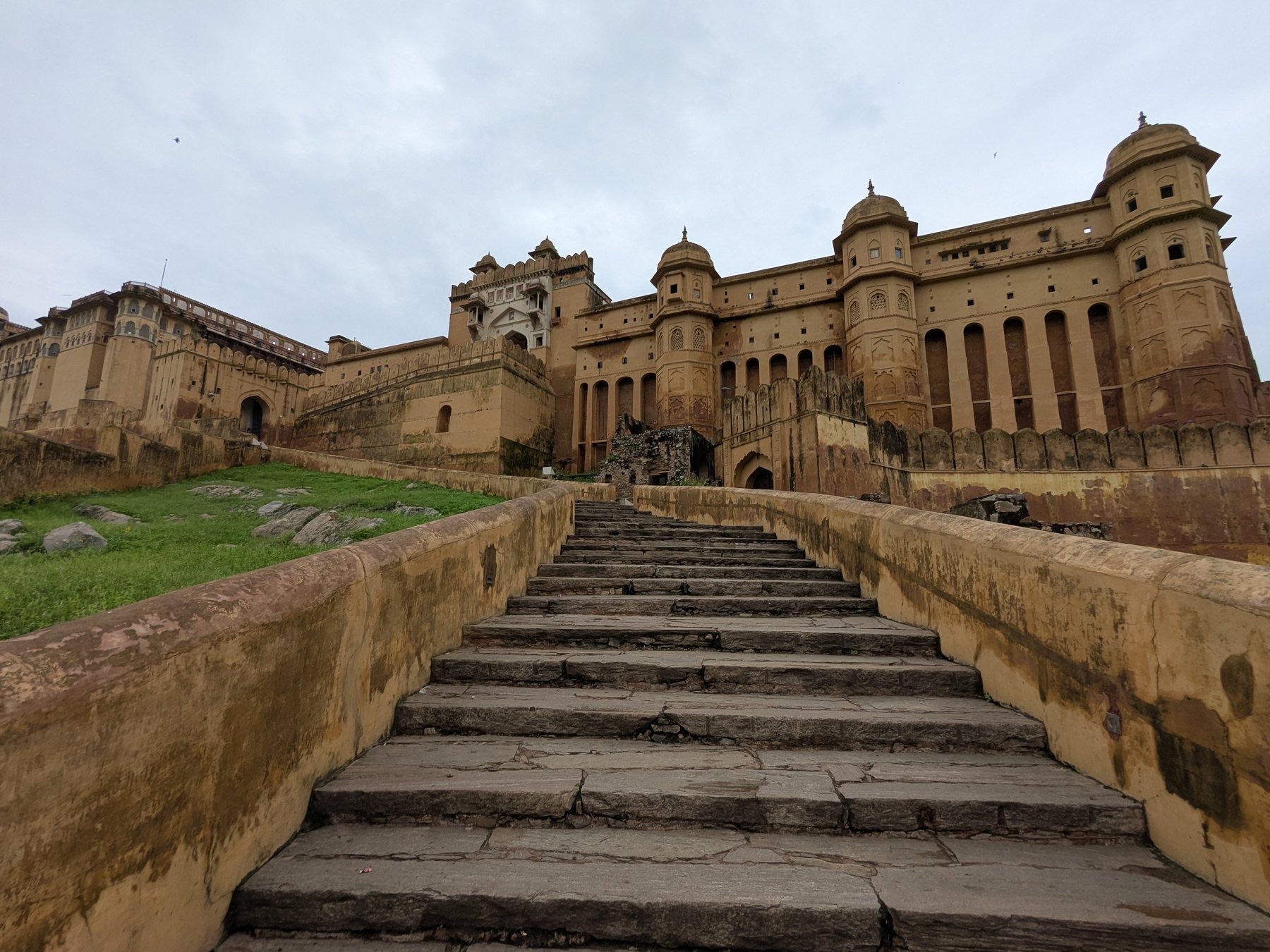
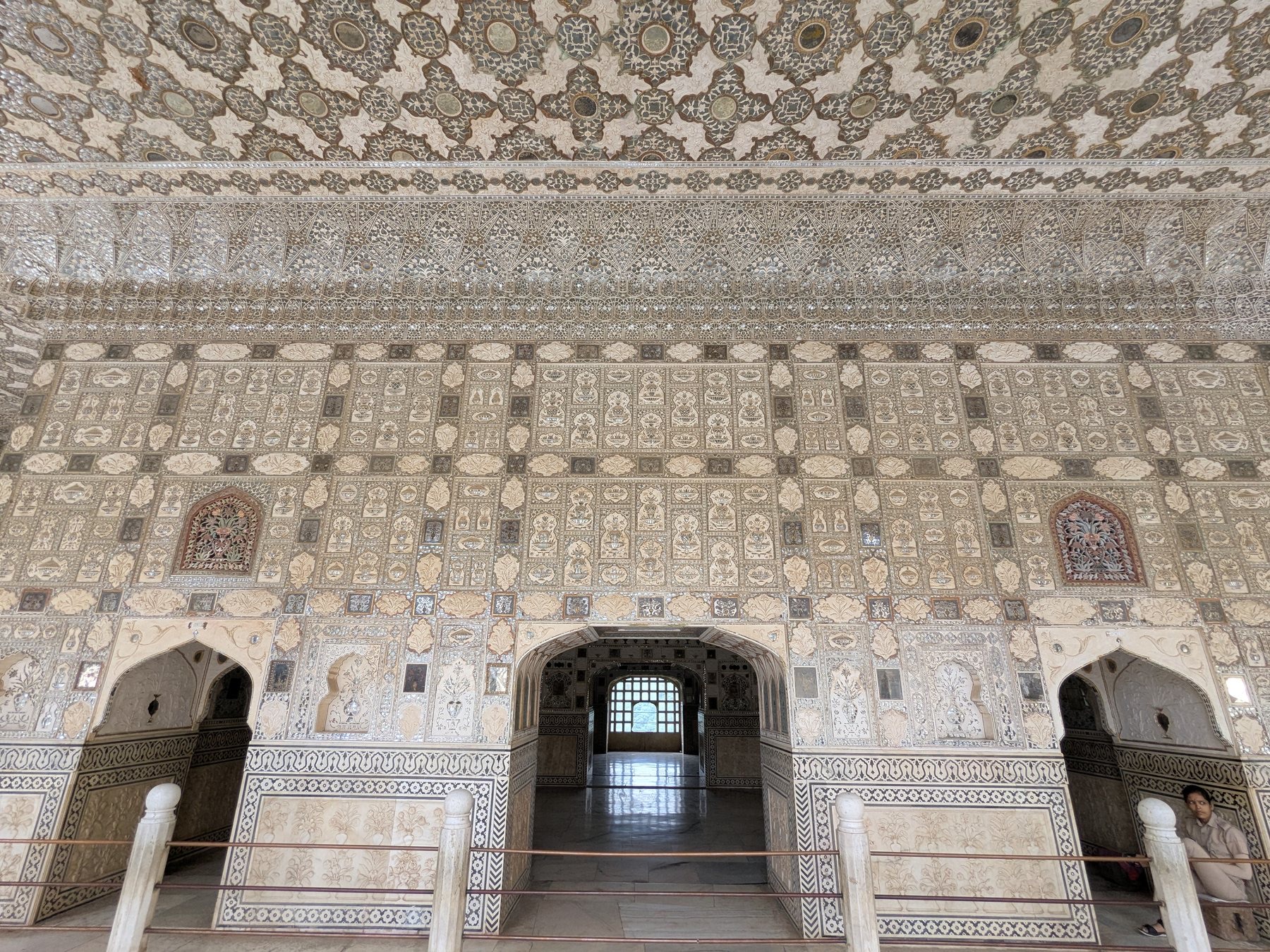
Amer predates Jaipur and explains why a new capital on the plains was such a strategic change. The ascent passes defensive gates and broad courts before arriving at increasingly private palace rooms. Mirror mosaic in the Sheesh Mahal multiplies small points of light, a delicate counterpoint to the massive walls outside. Together, Amer and Jaipur show continuity rather than replacement: the hill fort, palace culture and new commercial city remained part of one regional story.
Research and planning sources
The historical notes above are paraphrased from the following official heritage and tourism resources. Opening hours, tickets, conservation closures, trail access and photography rules can change; check the linked authorities before travelling.
Places from the journey
Saved places
Heritage
Hawa Mahal
The 1799 screen-like palace façade overlooking the old city's bazaar.
Open in Google Maps ↗World Heritage
Jantar Mantar Jaipur
Sawai Jai Singh II's monumental early eighteenth-century observatory.
Open in Google Maps ↗Palace and museum
City Palace Jaipur
Royal courtyards and collections at the centre of the planned city.
Open in Google Maps ↗Fort and palace
Amer Fort
A Rajput palace-fort above Maota Lake, north of Jaipur.
Open in Google Maps ↗