Travelled June 25, 2017 · Published Aug 8, 2026 · 315 words
Mahabalipuram: Pallava stone beside the sea
A 2017 journal through rock-cut rathas, open-air relief and the Shore Temple on Tamil Nadu's Coromandel coast.
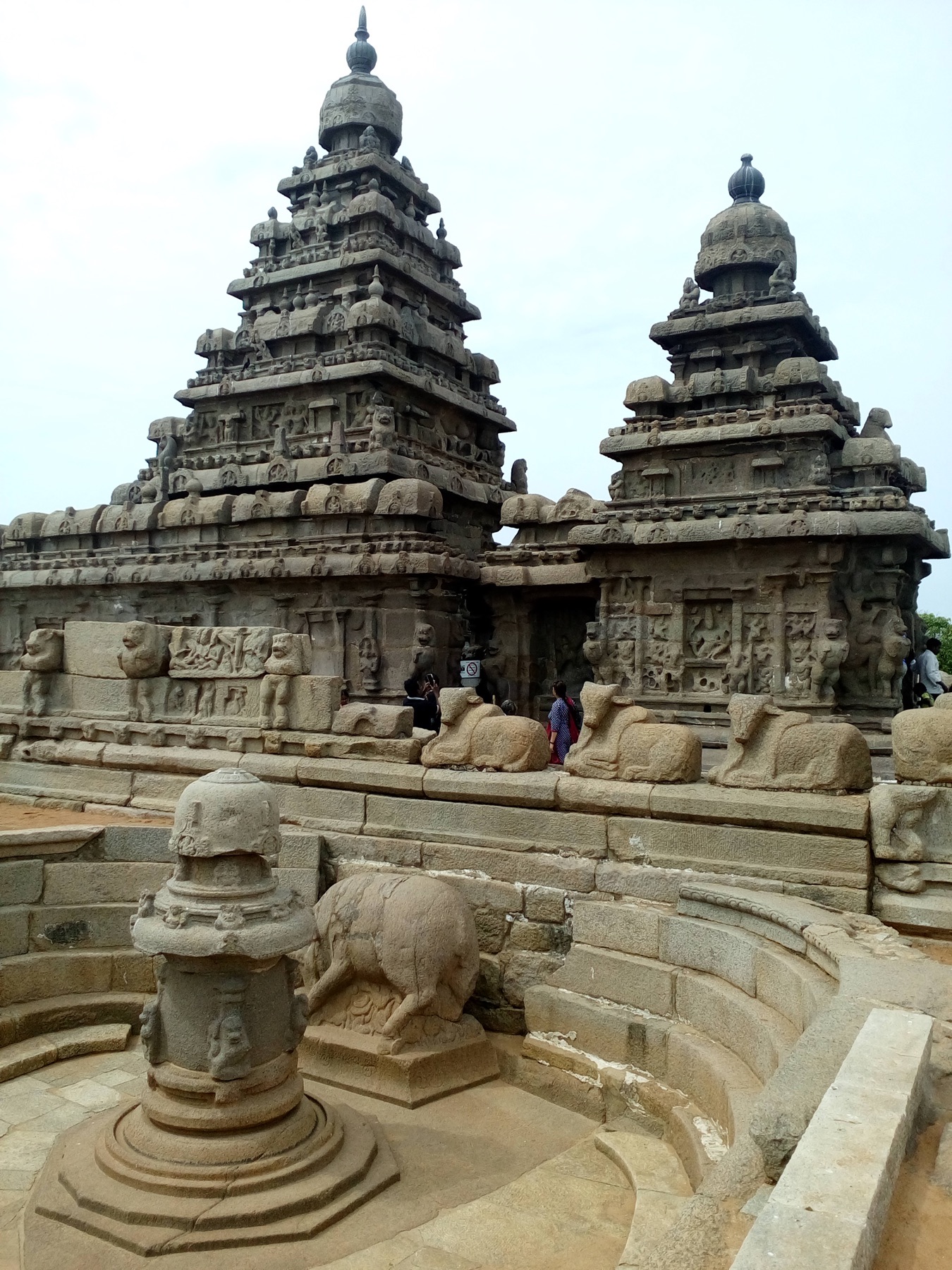
Journal entry
Notes from the journey
Mahabalipuram was a Pallava port as well as a workshop in stone. Across a compact landscape, sculptors tested cave sanctuaries, monolithic shrine models, open-air narrative relief and freestanding temples. The 2017 photographs move from carved granite to the Shore Temple, where salt air and waves remain part of the monument's setting.
Archive note: the photographs in this journal come from Varghese Tony's personal travel collection. Historical context is independently researched from the authoritative sources linked at the end.
Rathas as experiments in form
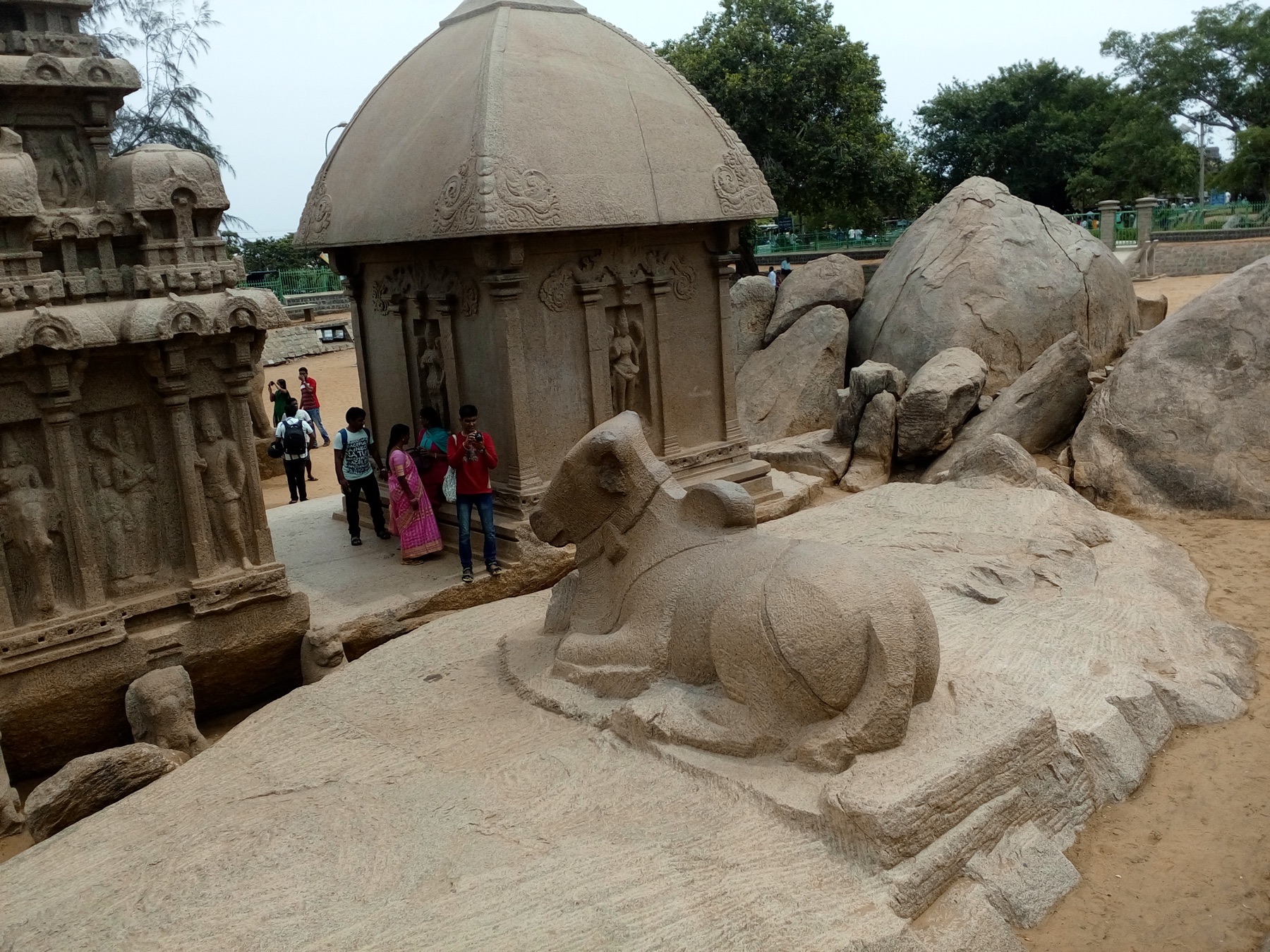
The Pancha Rathas were carved from individual granite outcrops in the seventh century. Their popular names connect them to the Pandavas, but they were Pallava architectural experiments rather than functioning chariots or epic-period buildings. Different roof forms, plans and sculptural programs appear side by side, almost like a full-scale catalogue for builders.
A story spread across the rock
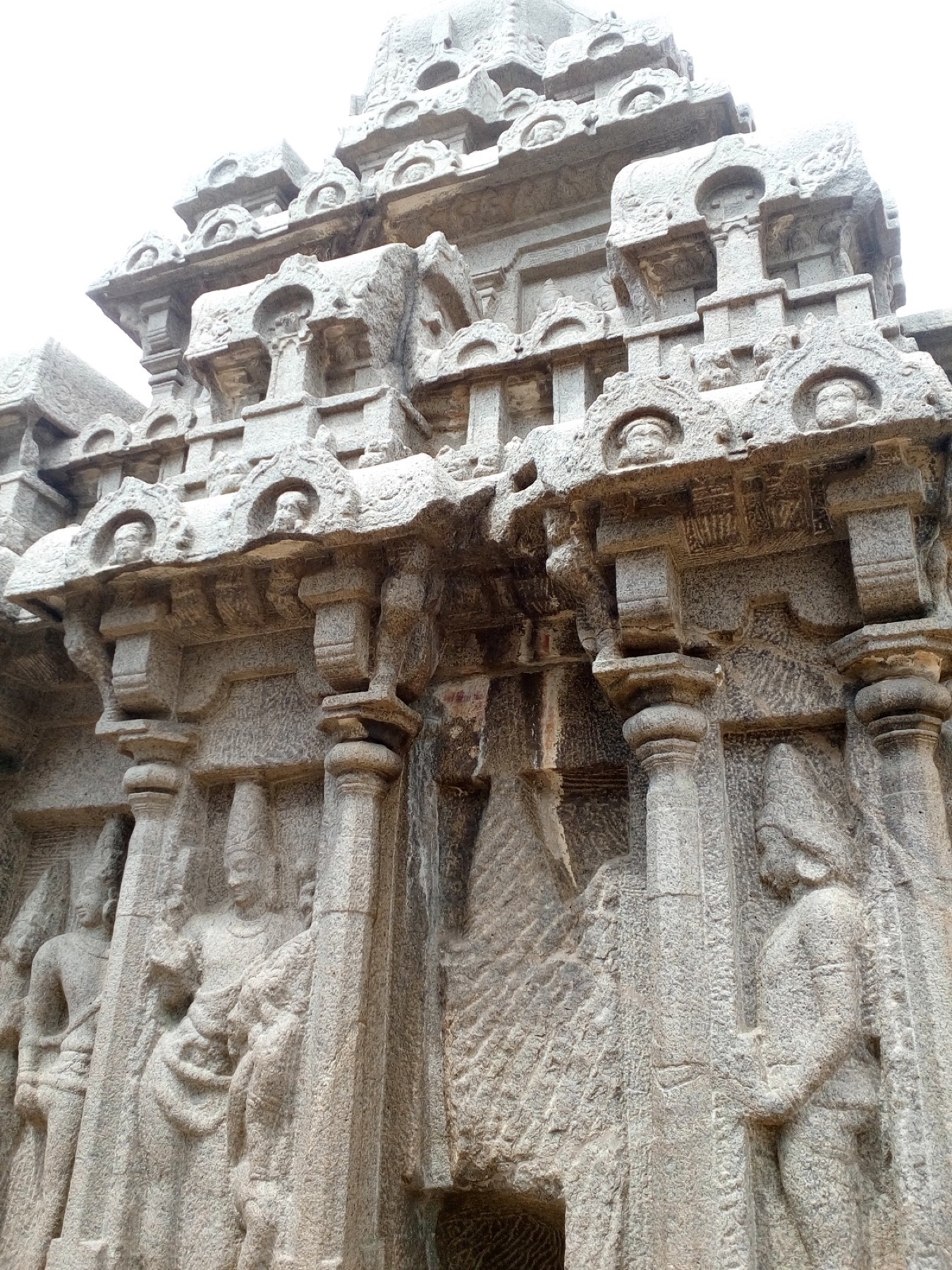
The enormous relief known as the Descent of the Ganges or Arjuna's Penance gathers gods, ascetics, animals and mythical beings around a natural cleft. The competing titles reflect a productive ambiguity: it may evoke the descent of the sacred river, Arjuna's austerities, or both. Small observations—especially the famous cat imitating an ascetic—keep the cosmic scene playful and human.
The Shore Temple and a maritime horizon
Unlike the excavated caves and monoliths, the Shore Temple is a structural complex assembled from dressed stone. UNESCO places the Mahabalipuram monuments in the seventh and eighth centuries under the Pallavas. Its coastal position made the temple a landmark for the port, but also exposes it to salt, wind and severe weather. Conservation and the sea are inseparable parts of its modern story.
Research and planning sources
The historical notes above are paraphrased from the following official heritage and tourism resources. Opening hours, tickets, conservation closures, trail access and photography rules can change; check the linked authorities before travelling.
Places from the journey
Saved places
World Heritage
Shore Temple
An early eighth-century structural temple facing the Bay of Bengal.
Open in Google Maps ↗World Heritage
Pancha Rathas
Monolithic shrine forms carved from granite outcrops.
Open in Google Maps ↗World Heritage
Descent of the Ganges
A monumental open-air relief also interpreted as Arjuna's Penance.
Open in Google Maps ↗Geological landmark
Krishna's Butter Ball
A balancing granite boulder within the monument landscape.
Open in Google Maps ↗