Travelled July 24, 2025 – July 26, 2025 · Published Aug 8, 2026 · 333 words
Udaipur: palaces held between hills and water
A 2025 photo route through City Palace, Lake Pichola and Sajjangarh, where Mewar's architecture is inseparable from the Aravalli landscape.
Journal entry
Notes from the journey
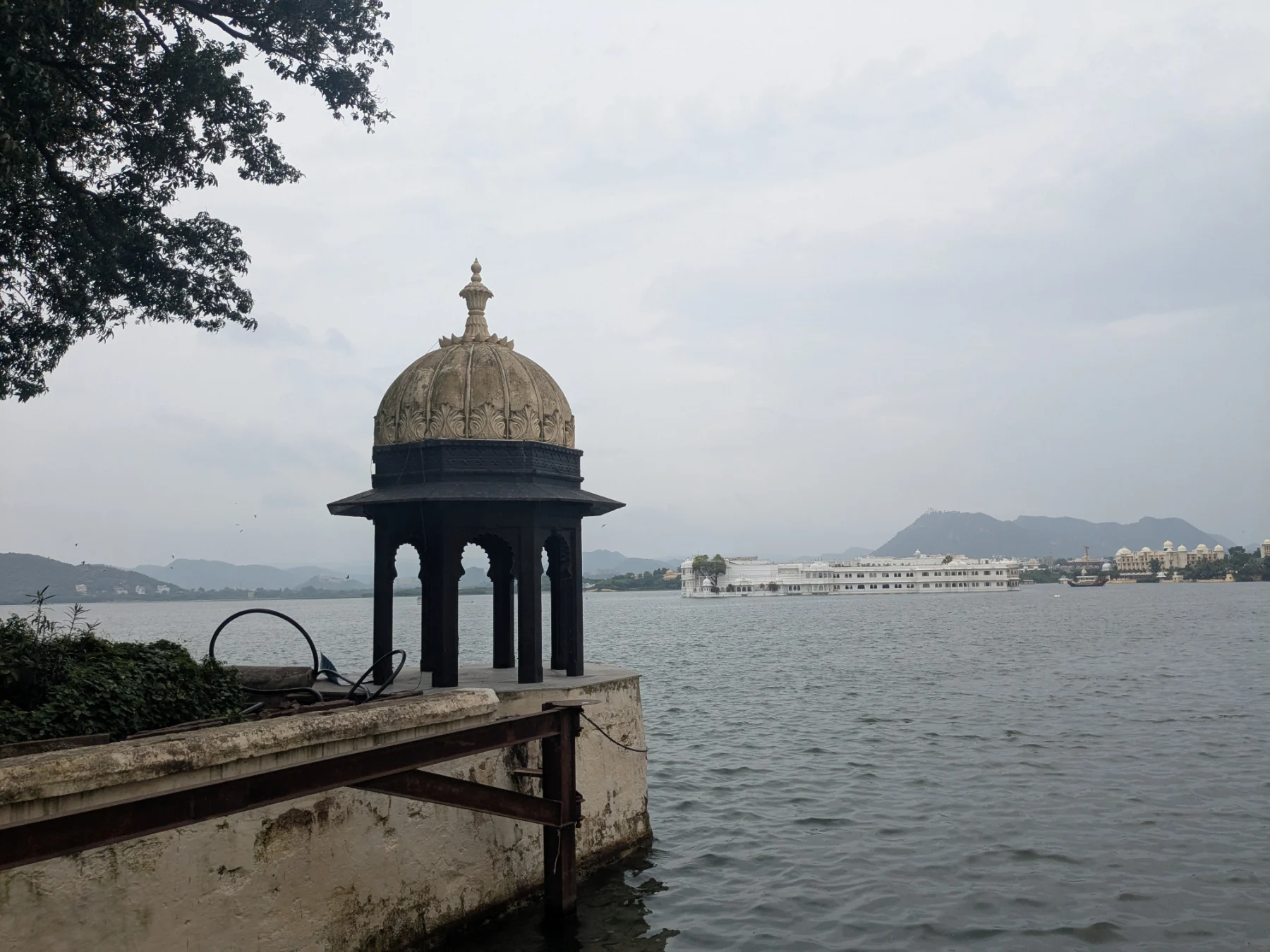
Udaipur's architecture makes most sense when seen with water and hills in the frame. Founded by Maharana Udai Singh II as Mewar's new capital in the sixteenth century, the city gathered palaces, temples and neighbourhoods along connected lakes. This 2025 route moves from the dense detail of City Palace to the broad horizon at Sajjangarh.
Archive note: the photographs in this journal come from Varghese Tony's personal travel collection. Historical context is independently researched from the authoritative sources linked at the end.
A palace that grew for generations
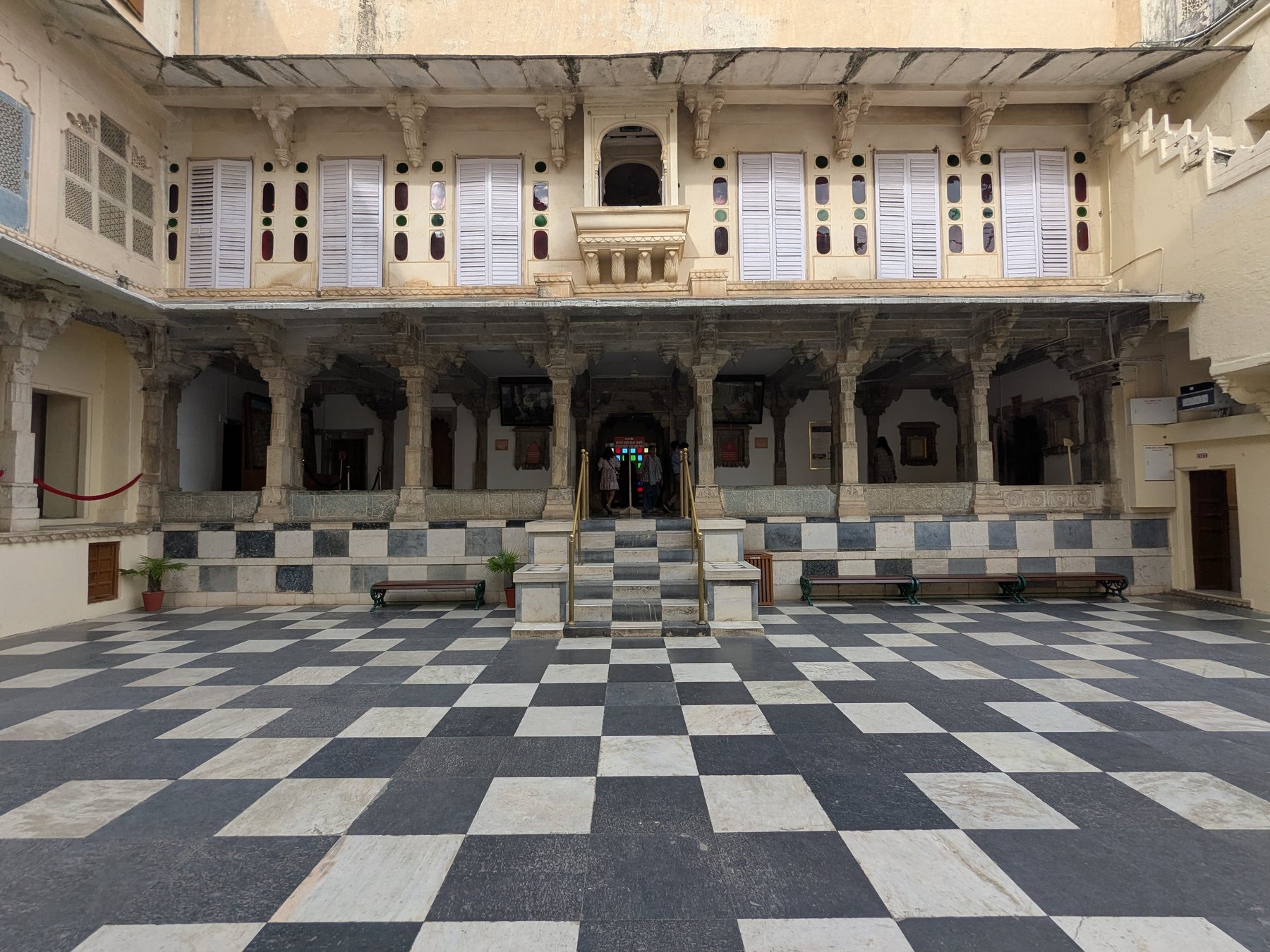
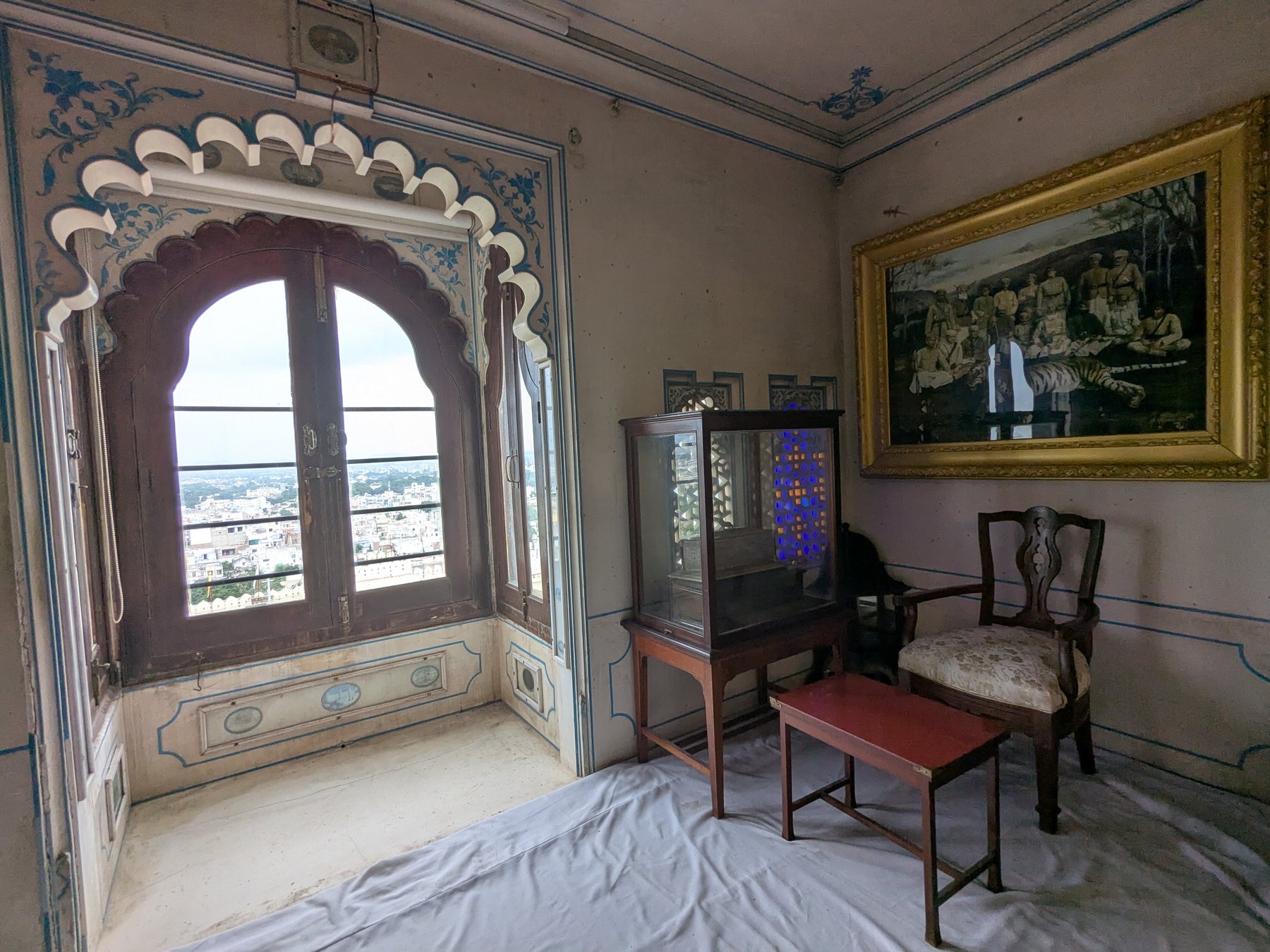
City Palace is not one building but an accretion of major and minor palaces above Lake Pichola. Rajasthan Tourism describes four principal palaces within the larger complex, now partly museum. Narrow passages open suddenly into painted courts, balconies and framed views. That alternation between compression and outlook is the key to the visit: power is expressed in decoration, but also in the ability to survey lake, city and approach routes from above.
The city reflected after dark
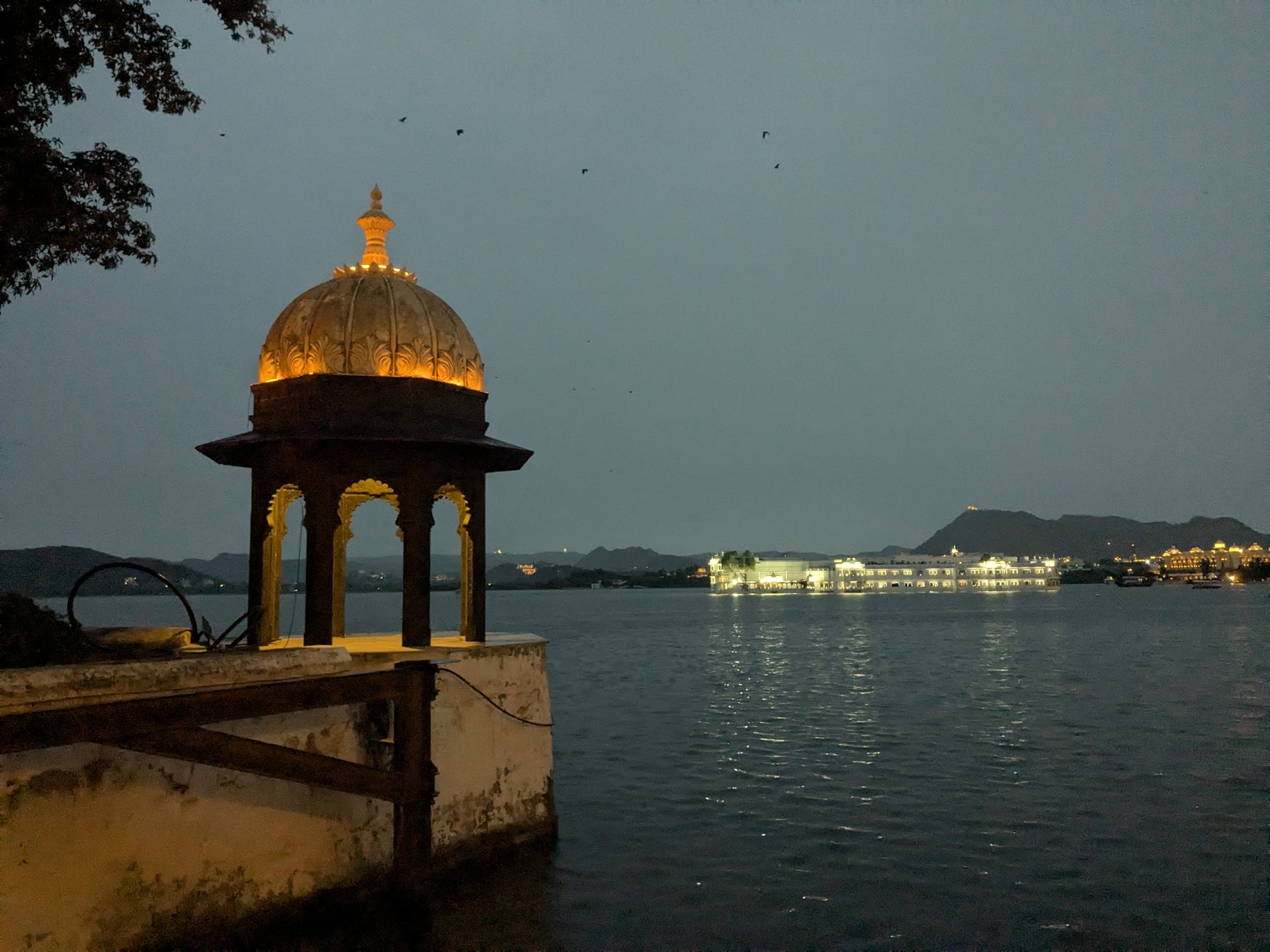
Lake Pichola predates the royal capital, yet it became central to Udaipur's identity. Jag Mandir and Jag Niwas occupy islands while City Palace dominates the eastern bank. After sunset, reflections loosen the hard edges of the architecture and reveal how much of Udaipur's spectacle depends on water management, shoreline and changing light rather than on buildings alone.
Sajjangarh and the unfinished observatory
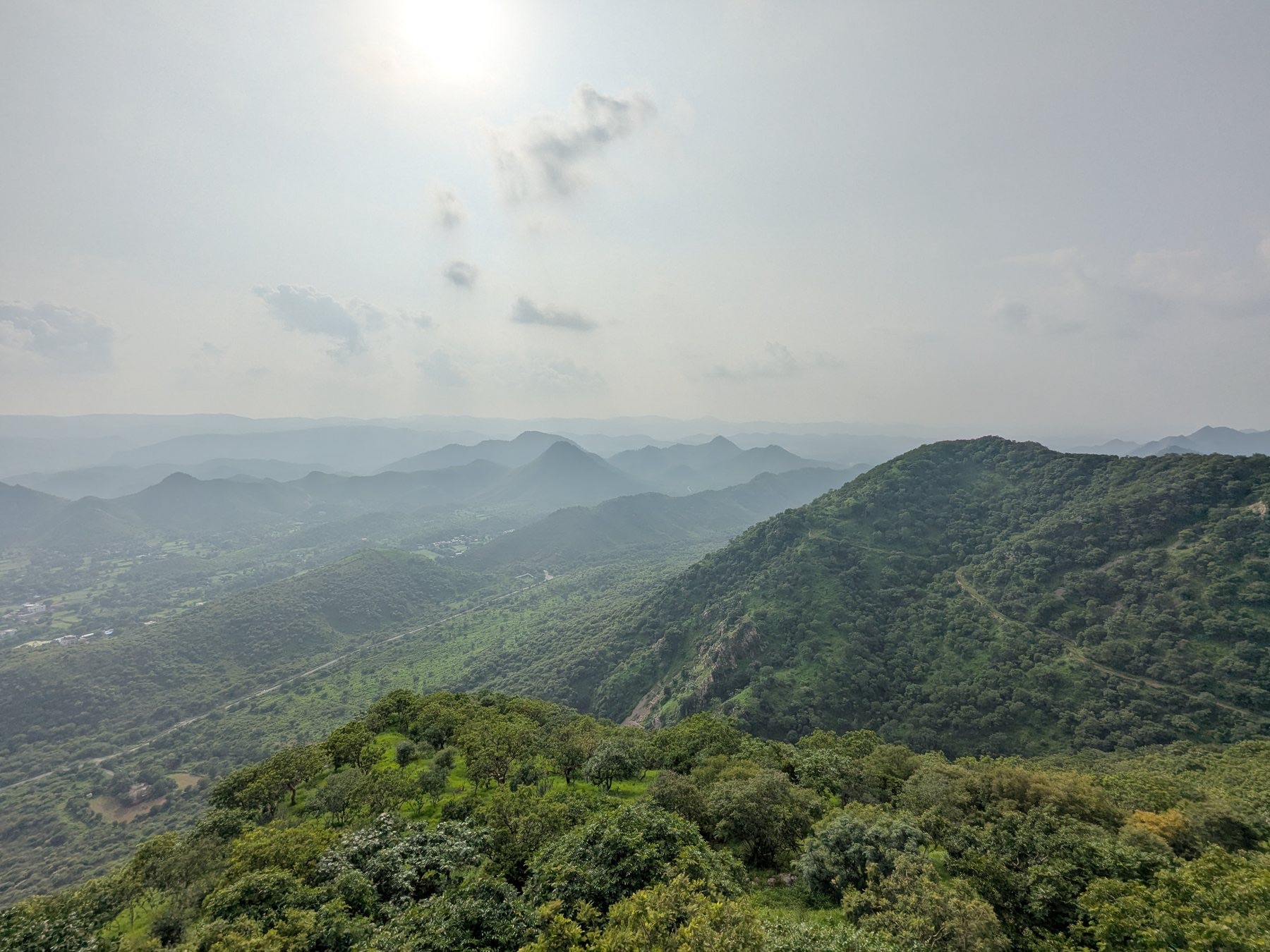
The nineteenth-century Sajjangarh palace crowns a high ridge west of the city. Rajasthan Tourism records that Maharana Sajjan Singh intended an astronomical centre there, a plan left incomplete after his early death. The building later became associated with the monsoon and hunting. From its terraces, Udaipur's separate lakes resolve into a connected landscape, with the Aravallis setting the outer frame.
Research and planning sources
The historical notes above are paraphrased from the following official heritage and tourism resources. Opening hours, tickets, conservation closures, trail access and photography rules can change; check the linked authorities before travelling.
Places from the journey
Saved places
Palace and museum
City Palace Udaipur
The layered Mewar palace complex above Lake Pichola.
Open in Google Maps ↗Lake and cityscape
Lake Pichola
The historic lake holding Jag Mandir and the Lake Palace.
Open in Google Maps ↗Sacred heritage
Jagdish Temple
A seventeenth-century Vishnu temple near City Palace.
Open in Google Maps ↗Palace and viewpoint
Sajjangarh Monsoon Palace
A hilltop palace overlooking Udaipur and the Aravallis.
Open in Google Maps ↗