Four weeks · Rail, road, hill and backwater
South India, slowly
A practical route from Vijayanagara stone through Mysuru and the Nilgiris, down Kerala’s Malabar and backwater coast, and across Tamil Nadu’s temple cities to the meeting of three seas.
Start with the shape of the journey
A route built around landscapes, not state borders
The referenced backpacking itinerary links Hampi, Mysuru, Ooty, Wayanad, Kozhikode, Kochi, Kottayam, Munroe Island, and Neyyar. This version keeps that useful north-to-south spine, adds places already present in the personal archive, and opens a few carefully researched branches where the geography makes them natural.
How to use this page
Treat each “week” as a cluster, not a booking prescription. Monsoon conditions, festival crowds, protected-area rules, train availability, and mountain roads can change the sensible order. Drop a branch before compressing every stop into a transfer day.
Read the reference itinerary →Archive note
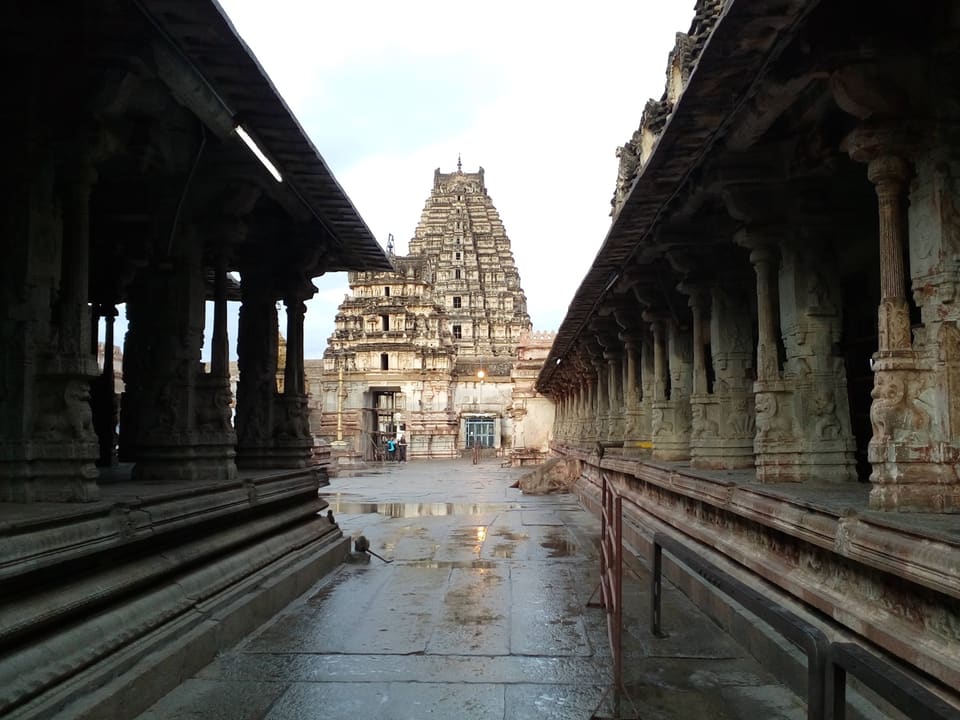
The photographs come from journeys made between 2000 and 2017. They confirm a personal connection to Hampi, Mysuru, Ooty, Wayanad, Kochi, the Kaveri delta, Mahabalipuram, and Puducherry; researched additions are clearly described as route ideas.
Week 1 · Karnataka
Empires, palace country, and optional coast
Use Hampi as the anchor, then choose either the Chalukyan north or the greener western and southern branches.
Hampi
Vijayanagara district · Karnataka
Give the capital of Vijayanagara at least two full days. Separate the sacred centre around Virupaksha Temple and Hampi Bazaar from the royal enclosure, stepped tank, Lotus Mahal, elephant stables, and Vittala complex. A guide helps the boulder landscape resolve into a city of markets, water systems, temples, and ceremony.
Badami, Aihole & Pattadakal
Bagalkot district · Karnataka
Badami’s cave temples and fort rise around Agastya Lake; Aihole reads like a laboratory of early temple forms; Pattadakal brings northern and southern architectural languages together beside the Malaprabha. Base in Badami and resist turning all three into a hurried transit stop.
Mysuru & Srirangapatna
Southern Karnataka
Mysuru Palace, Devaraja Market, the rail museum, and Chamundi Hill create a compact city stay. Add Srirangapatna separately for the Kaveri-island setting, Tipu Sultan-era sites, and Ranganathaswamy Temple rather than squeezing it between buses.
Kodagu
Western Ghats · Karnataka
Kodagu is a landscape branch rather than a single pin: coffee estates, Madikeri, Raja’s Seat, Abbey and Iruppu Falls, the Kaveri’s source country, and forest-edge stays. Build in road time and choose a small area instead of criss-crossing the district.
Chikkamagaluru
Western Ghats · Karnataka
Coffee estates and the Mullayanagiri–Baba Budangiri high country make this a mountain alternative to Kodagu. Belur and Halebidu can add Hoysala architecture, but weather and winding roads should set the number of stops.
Gokarna
Uttara Kannada coast
Gokarna combines a pilgrimage town with headland paths linking Kudle, Om, Half Moon, and Paradise beaches. It is an optional western detour—not a logical stop on every Hampi-to-Mysuru route— and the coastal heat changes what makes a comfortable walking day.
Week 2 · Nilgiris and Malabar
Climb into tea country, descend through forest
The Mysuru–Ooty–Wayanad–Kozhikode sequence works because the landscape changes gradually across three states.
Ooty, Coonoor & Kotagiri
The Nilgiris · Tamil Nadu
Treat the Nilgiris as a small highland region. Ooty is the busy transport and garden base; Coonoor adds the mountain railway, Sim’s Park, tea country, Lamb’s Rock, and Dolphin’s Nose; Kotagiri offers a quieter eastern ridge. Pick two bases only if you have time to walk rather than shuttle.
Wayanad
Western Ghats · Kerala
Wayanad needs a chosen base: Kalpetta or Meppadi for southern hills, Mananthavady for the north, or Sultan Bathery for the eastern side. Forest access, cave entry, waterfalls, and wildlife routes change with rain and official restrictions, so verify the day’s realistic options locally.
Kozhikode & Kappad
Malabar coast · Kerala
Kozhikode is the route’s first lowland reset: markets, Tali Temple, regional food, the beach at sunset, and access to Kappad. At Kappad, a rocky headland, fishing coast, backwaters, and the site’s spice-route history matter more than treating it as a generic swimming beach.
Bekal
Kasaragod · Kerala
Bekal Fort’s laterite walls meet the Arabian Sea in northern Kerala. It is a worthwhile extension only when continuing along the coast toward Kannur or Mangaluru; from Kozhikode it is a real journey, not a casual afternoon add-on.
Cherai and Vypin
Kochi coast · Kerala
Cherai works as a quieter coastal transition before Fort Kochi. The sea, lagoons, fishing settlements, and Vypin’s long island geography reward a slow approach. The personal archive records a 2007 visit; current swimming conditions still need a local check.
Week 3 · Kerala
Harbour city, high ranges, and smaller waterways
Choose either a central highland loop or a longer southbound backwater line; doing both needs unhurried transfers.
Fort Kochi & Mattancherry
Ernakulam · Kerala
Walk Fort Kochi’s harbour edge, layered churches, old warehouses, and art spaces, then continue to Mattancherry’s palace, synagogue, spice streets, and lived neighbourhoods. The Biennale changes the route when an edition is active, so check current venues first.
Munnar
High Ranges · Kerala
Munnar’s tea estates, high grasslands, shola forest, and reserve landscapes are spread along mountain roads. Choose one direction per day, avoid wildlife disturbance, and verify seasonal access rather than chasing every viewpoint on a pin list.
Periyar and Thekkady
Idukki · Kerala
Thekkady is the visitor base for Periyar’s forest, lake, and guided nature programmes. Book only official activities, keep wildlife expectations realistic, and allow for weather. The route works naturally between Munnar and the Kottayam lowlands.
Alappuzha and Kuttanad
Vembanad backwaters · Kerala
Alappuzha is the best-known backwater gateway, but the experience becomes clearer beyond the jetty: canals, below-sea-level fields, villages, ferries, and the working water geography of Kuttanad. A public ferry or smaller boat can be more observant than a rushed houseboat circuit.
Kottayam, Kumarakom & Malarikkal
Vembanad’s eastern shore
Kottayam is a practical rail and road base for Kumarakom’s lake edge and Malarikkal’s seasonal water-lily fields. Flowering, water level, boats, and field access are seasonal; confirm locally before building a day around the lilies.
Munroe Island
Kollam backwaters · Kerala
At the meeting of Ashtamudi Lake and the Kallada River, Munroe is a cluster of islands where a small canoe suits the narrow canals. Early water, village paths, coir work, fishing, birdlife, and erosion-sensitive banks call for a quiet, locally guided visit.
Varkala
Thiruvananthapuram district
Varkala’s cliff, beach, Janardhana Swamy Temple, and coastal laterite geology form a compact stop before Thiruvananthapuram. Respect cliff-edge barriers and sea warnings; erosion and seasonal conditions can change paths and safe bathing zones.
Neyyar Dam
Southern Kerala
Neyyar’s reservoir and forested hills make a green final Kerala branch. The Sivananda ashram mentioned by the reference article is one possible stay with its own programme and expectations; evaluate it separately from a casual dam visit.
Week 4 · Tamil south
Temple city, sacred island, and the end of the mainland
This researched extension turns the route east after Kerala instead of flying out from Kochi.
Madurai
Tamil Nadu
Meenakshi Amman Temple gives the old city its daily rhythm and visual centre. Thirumalai Nayakkar Palace, the Gandhi Memorial Museum, flower and food markets, and a deliberate evening walk reveal a living city rather than a single temple stop.
Rameswaram & Dhanushkodi
Pamban Island · Tamil Nadu
Rameswaram is both pilgrimage centre and island landscape: Ramanathaswamy Temple’s long corridors, sacred water, Pamban’s crossing, the A.P.J. Abdul Kalam Memorial, and the fragile road toward Dhanushkodi. Wind, heat, sea conditions, and transport should govern the outer-island day.
Kanniyakumari
Mainland India’s southern tip
The geography is the event: the Arabian Sea, Bay of Bengal, and Indian Ocean meet off the cape. Add the Vivekananda Rock Memorial, Thiruvalluvar Statue, Gandhi Mandapam, and—if time permits—the remarkable timber architecture of Padmanabhapuram Palace inland.
Kodaikanal
Palani Hills · Tamil Nadu
Kodaikanal is a cooler detour between Kerala and Madurai. The lake, Coaker’s Walk, shola-grassland ecology, and smaller village routes matter more than a sequence of roadside viewpoints. Fog, rain, and holiday traffic can transform the journey.
Alternative branch · Coromandel and Kaveri
Build a second journey instead of overloading the first
The personal archive already supports an eastern route from Chennai to Puducherry and the Kaveri delta.
- ChennaiNeighbourhoods, museums, food, and an early Marina Beach walk.
- MahabalipuramPallava cave temples, rathas, reliefs, and the Shore Temple.
- PuducherryHeritage lanes, Tamil streets, promenade light, and Auroville nearby.
- ChidambaramA living temple town and a natural pause before the Kaveri delta.
- Kumbakonam & ThiruvaiyaruTemple tanks, music history, and a base for Chola country.
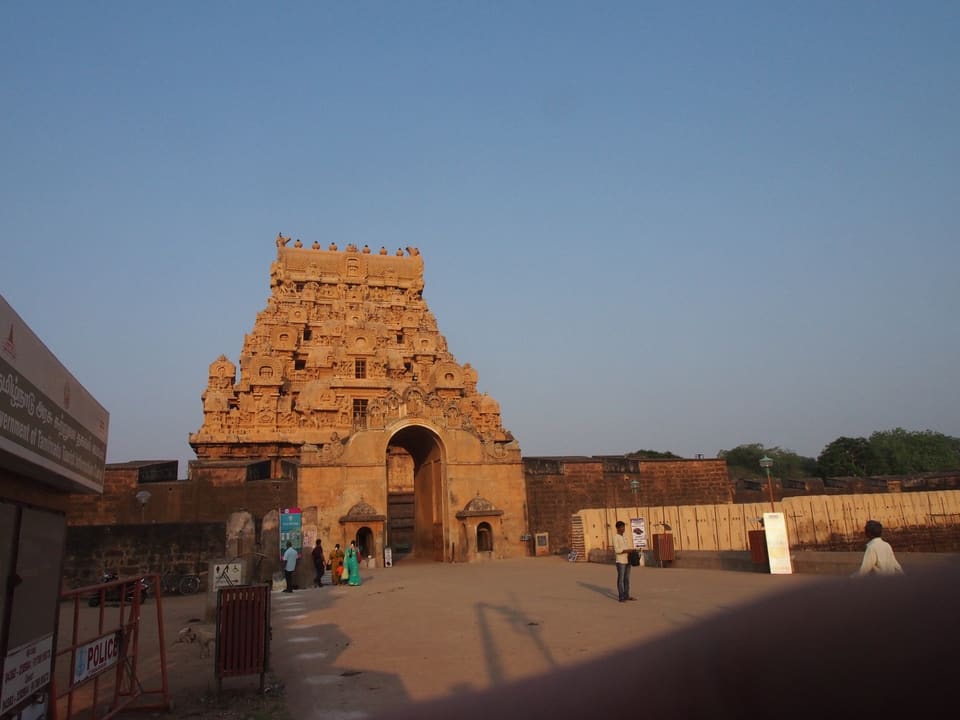
- ThanjavurBrihadisvara Temple, palace collections, murals, and delta history.
From the personal archive
Stone, cloud, art, and the Kaveri delta
These photographs belong to the journeys already recorded on Traveling Gander; researched route ideas above are not presented as personal visits.


Planning notes
Keep the route flexible enough to remain enjoyable
Use trains for the long line
Rail works best between major cities and along the Kerala and Tamil Nadu coasts. Reserve early where possible, but keep a bus or shorter route as backup.
Respect mountain time
Nilgiri, Kodagu, Wayanad, Munnar, and Kodaikanal roads are slower than their map distance. Avoid stacking a hill arrival with a full sightseeing day.
Let the monsoon edit
Heavy rain changes waterfall volume, forest access, visibility, landslide risk, beach safety, and ferry conditions. Removing a stop is often the best plan.
Choose smaller water
Public ferries, local canoes, and village boats can reveal more than a high-speed or oversized cruise. Use licensed operators and avoid wildlife disturbance.
Dress for living heritage
Many temples are active religious institutions with dress, footwear, photography, and non-Hindu access rules. Check at the entrance without assuming.
Verify every current detail
Opening days, protected-area permits, train services, festival access, and road conditions change. Use the official links here shortly before travel.
Sources and editorial note
Reference route, official context, original writing
The route structure was inspired by I Dream of Mangoes’ one-month itinerary. Historical, environmental, and visitor context was checked against Karnataka Tourism, Kerala Tourism, Incredible India, and UNESCO. All summaries are original; no source photography or long source passages are reproduced.